A walk through the city’s oldest park
The current Campo de San Francisco occupies the land that once belonged to the vanished convent of San Francisco El Grande. At the beginning of the 19th century, the then political and military governor of Salamanca, Don Isidro López, promoted the planting of over 600 poplars and the construction of a fountain in this space, thus giving rise to the Campo de San Francisco.
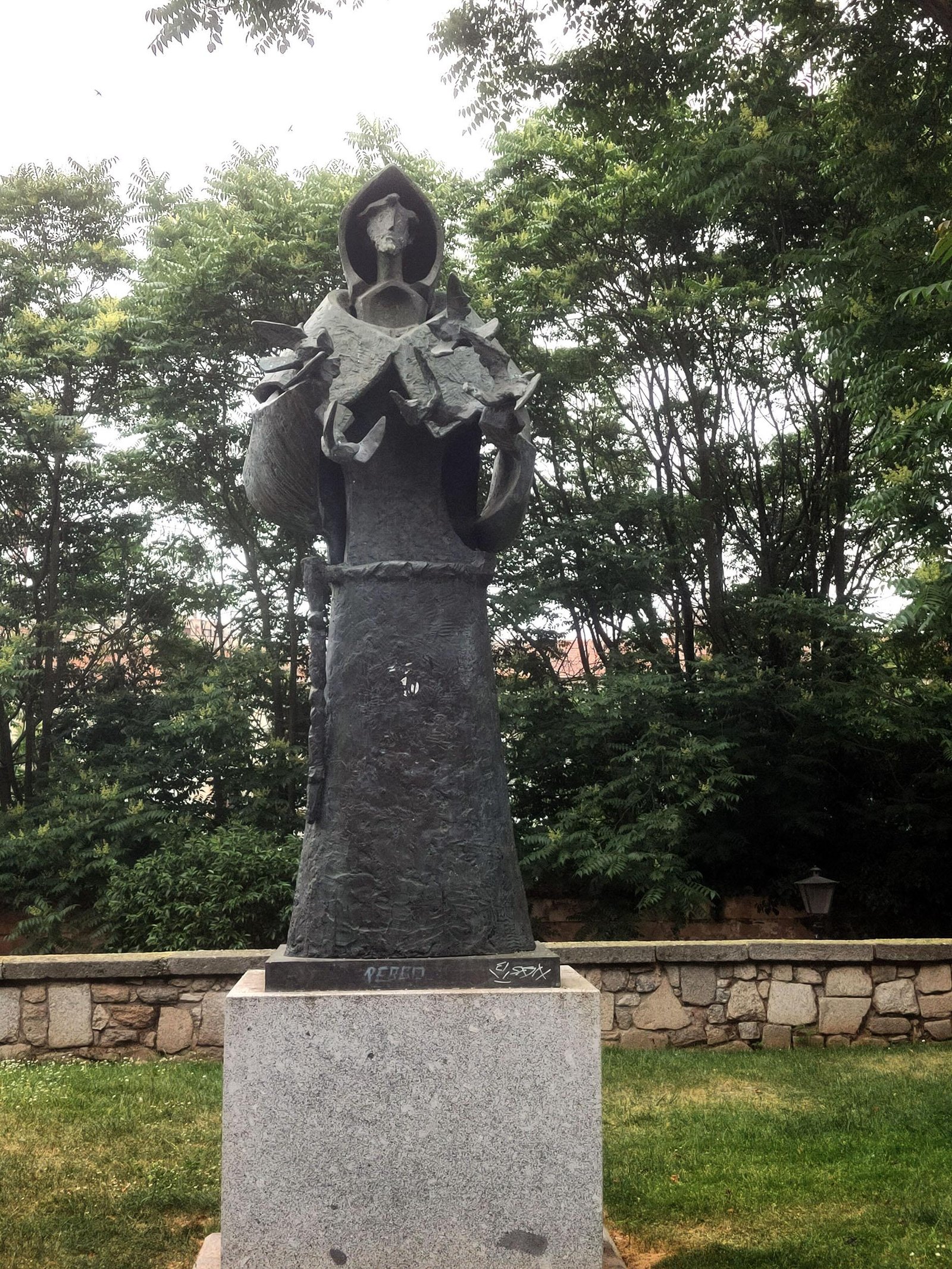
The saint himself appears in the garden thanks to the hands of sculptor Venancio Blanco. Each year, many locals gather here for the blessing of their pets on the day of San Antón.
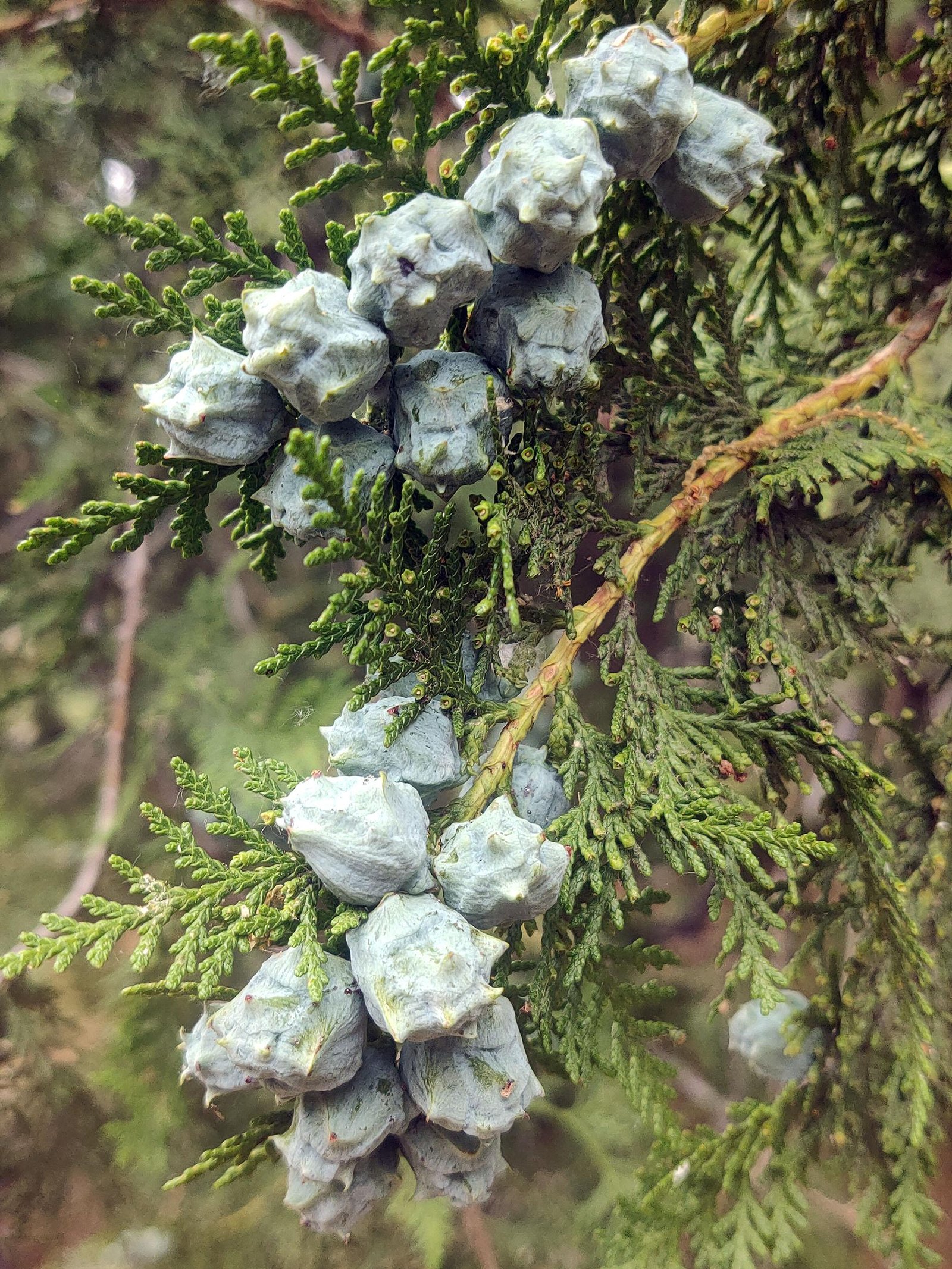
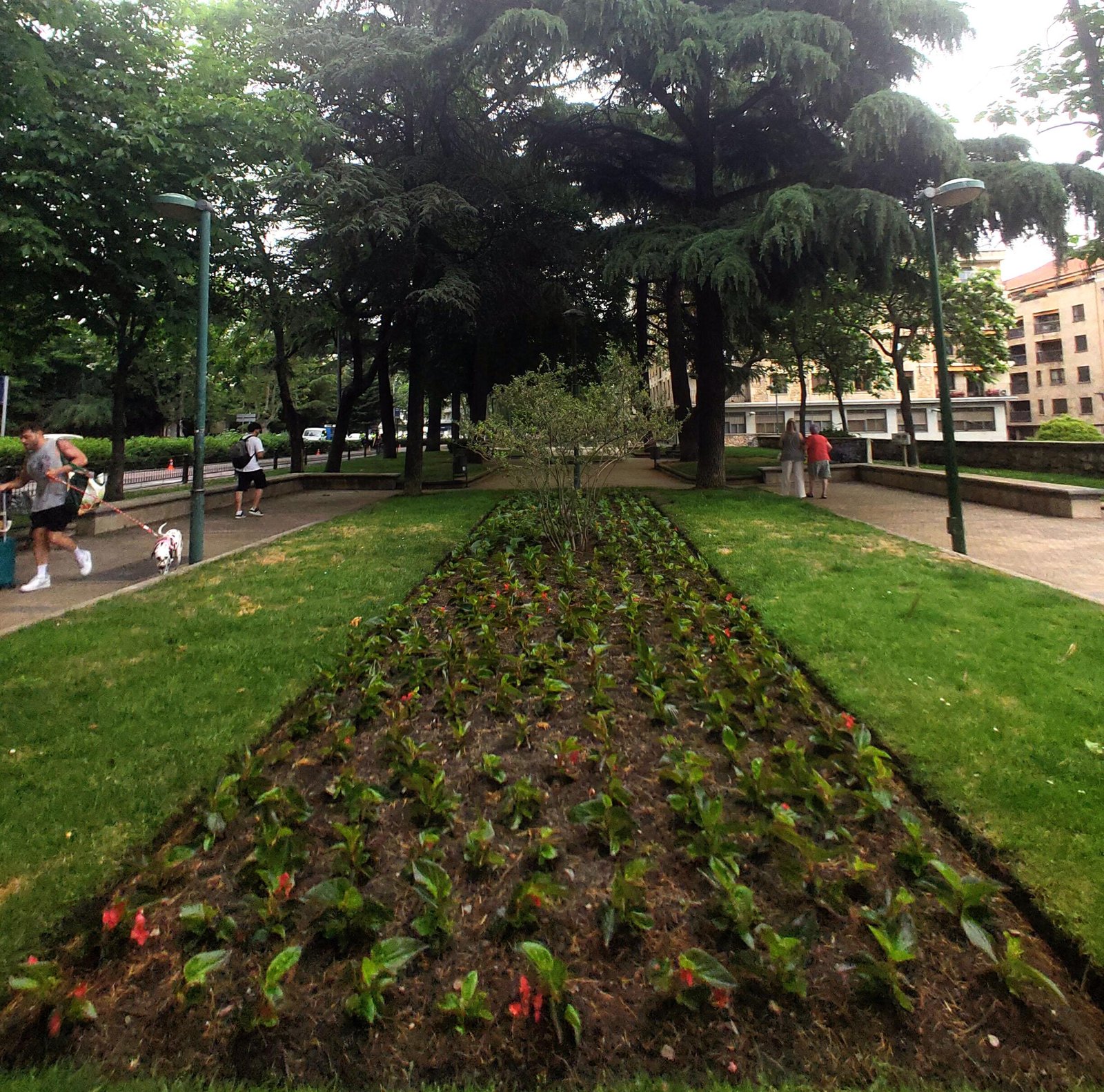
The first impression of the place is its continuous shade—a pleasant semi-darkness created by the combination of cedars, cypresses, and acacias within the flowerbeds. Towards the garden’s edges, two highly prized species can be found: the catalpa and the linden.
The catalpa blooms exuberantly, producing clusters of white light that stand out against the lime-green of its heart-shaped leaves. It is easy to recognize even in autumn, as long, pod-shaped fruits hang from its branches like weightless drops.
The linden trees have leaves similar in shape but smaller in size. Among them, we can discover flowers in shades of cream and soft yellow. Yet it is their gentle fragrance that gives them away, as their scent and calm reach us from a distance.
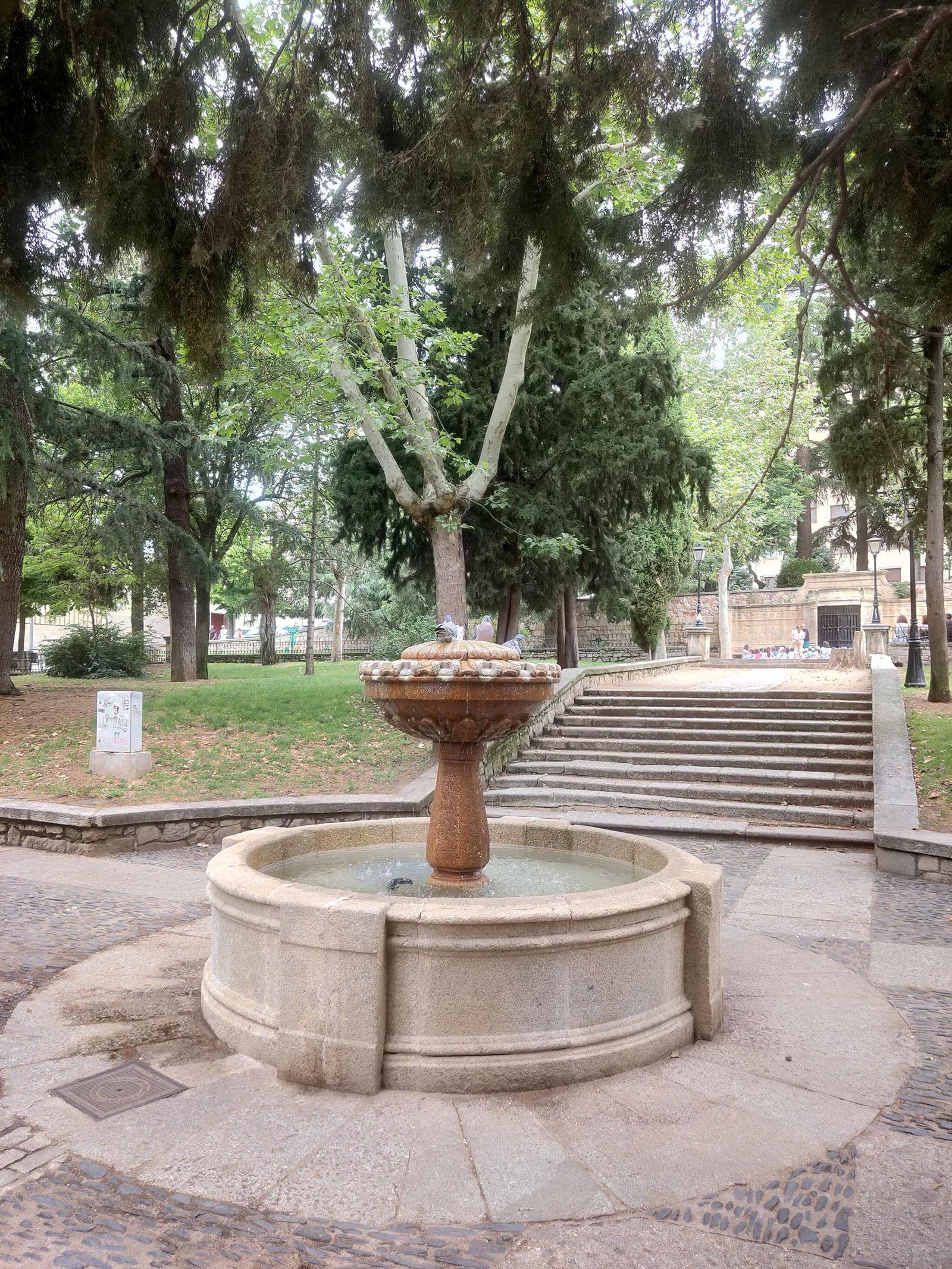
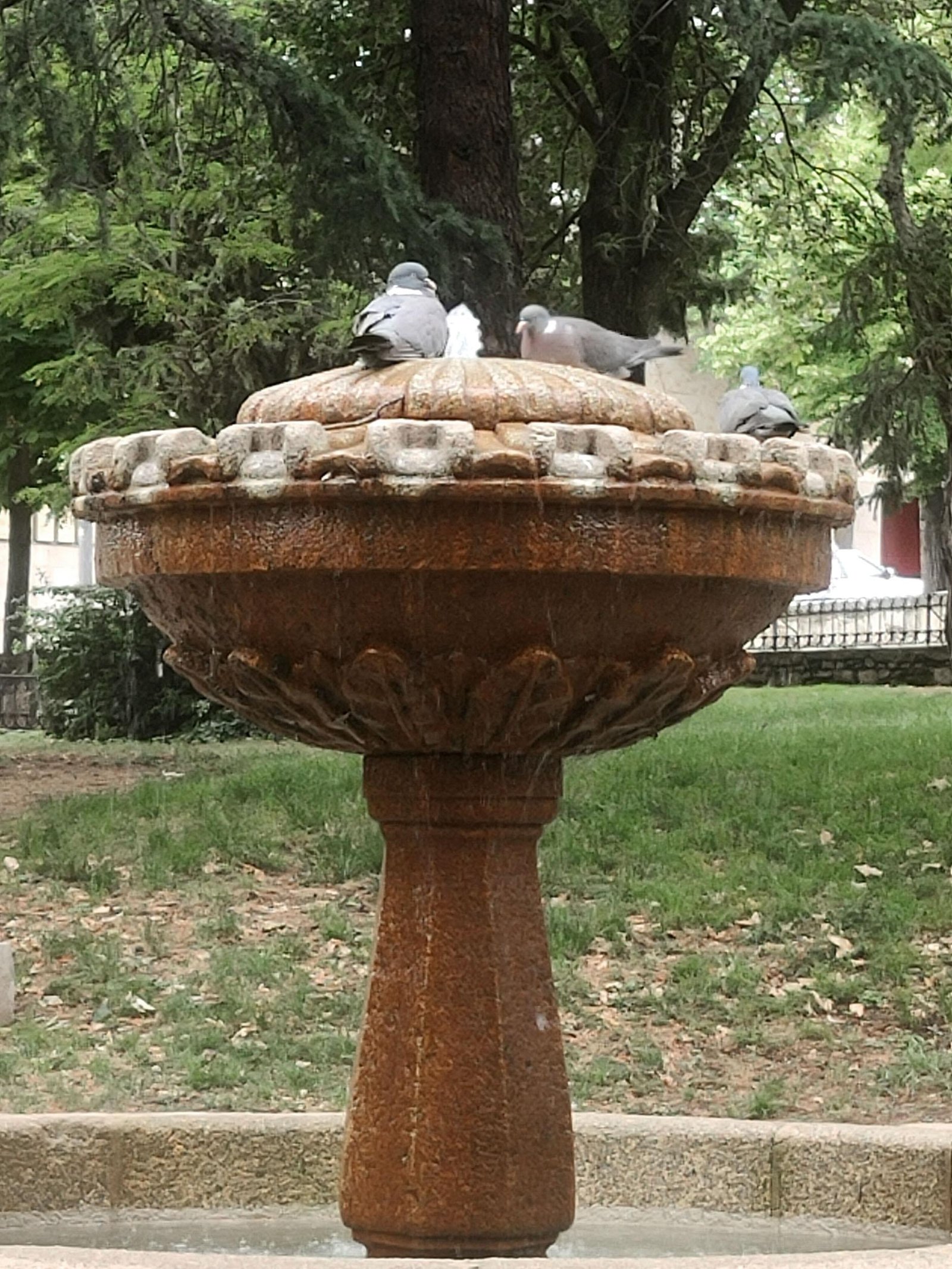
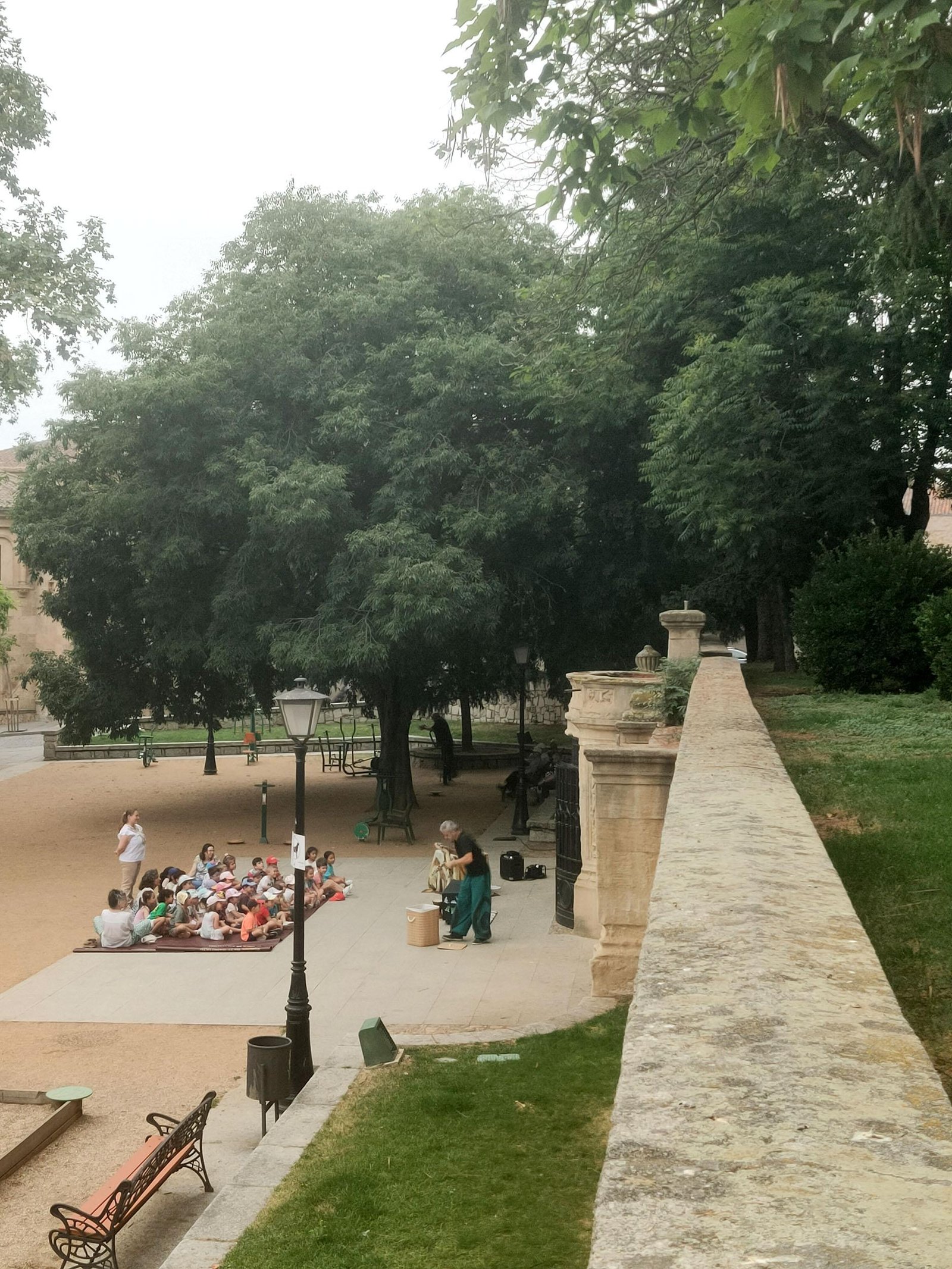
The garden’s various stairways provide a very special view of this tree-filled space. The effect is even more striking if you enter via the Paseo de Carmelitas. From this almost aerial vantage point, the dome of the Church of the Purísima Concepción forms the perfect backdrop. From here, we can hear the water of two fountains: one, in the double staircase, flows down into the green space, and the second, known by old locals as the Fuente de la Taza.
Birds call this garden home and know its resources well. Water is, of course, one of the most important. Small birds such as tits and blue tits use the fountains as drinking spots during their swift descents. They also make use of the hollows in the trunks of the shade-giving plane trees. When these trees lose branches, the wounds heal, leaving a cavity inside that serves as a nest.
We must not forget the horse chestnut avenue, which forms the garden’s boundary along Ramón y Cajal Street. Its leaves greet passersby like open hands. Seen up close against the light, they become natural stained-glass windows, with their veins tracing delicate patterns. Once again, these trees provide a safe haven for nests. Goldfinches and greenfinches build their baskets in the forks, while their songs create a living soundtrack for those strolling through the garden.
Try to find…
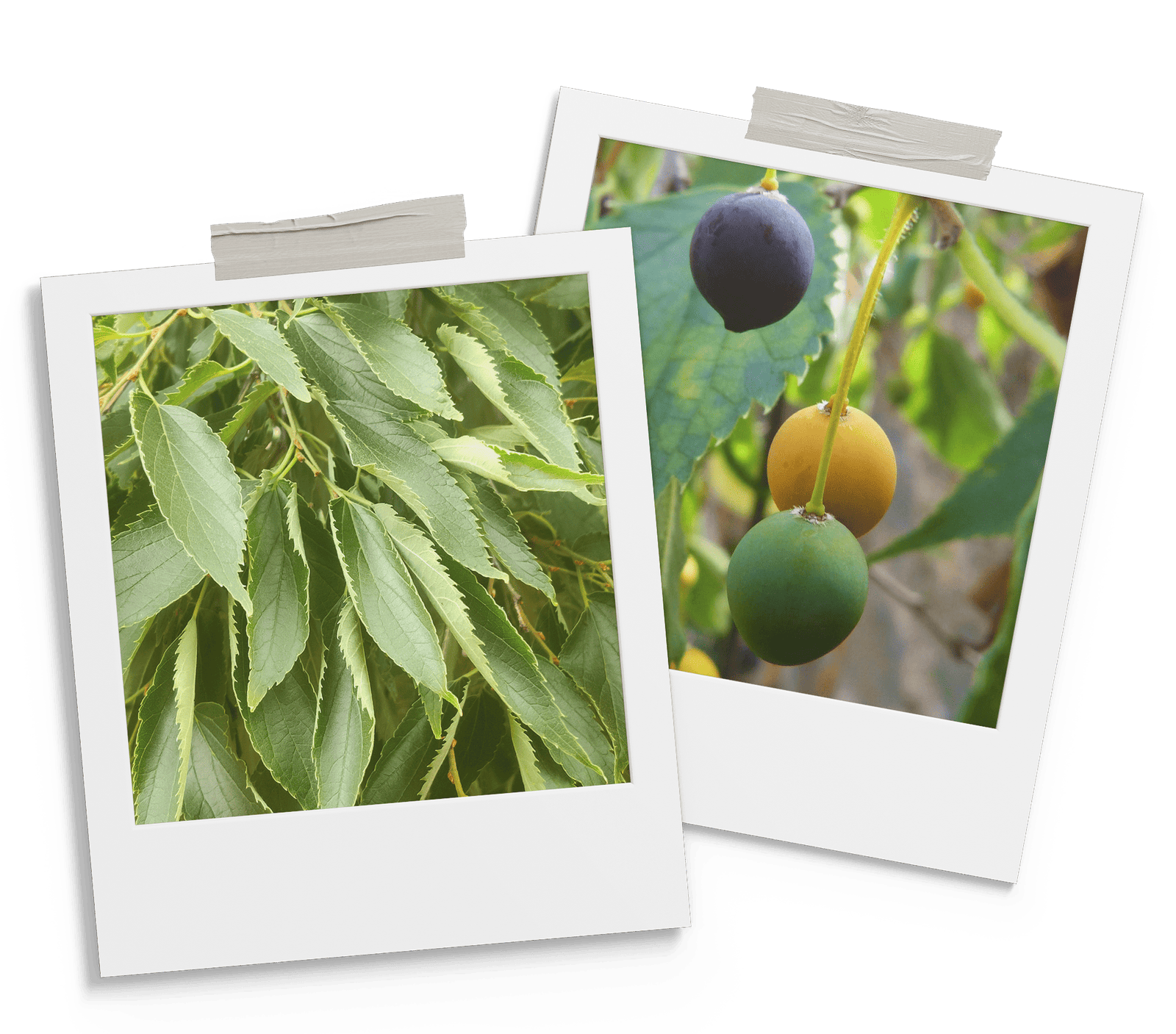
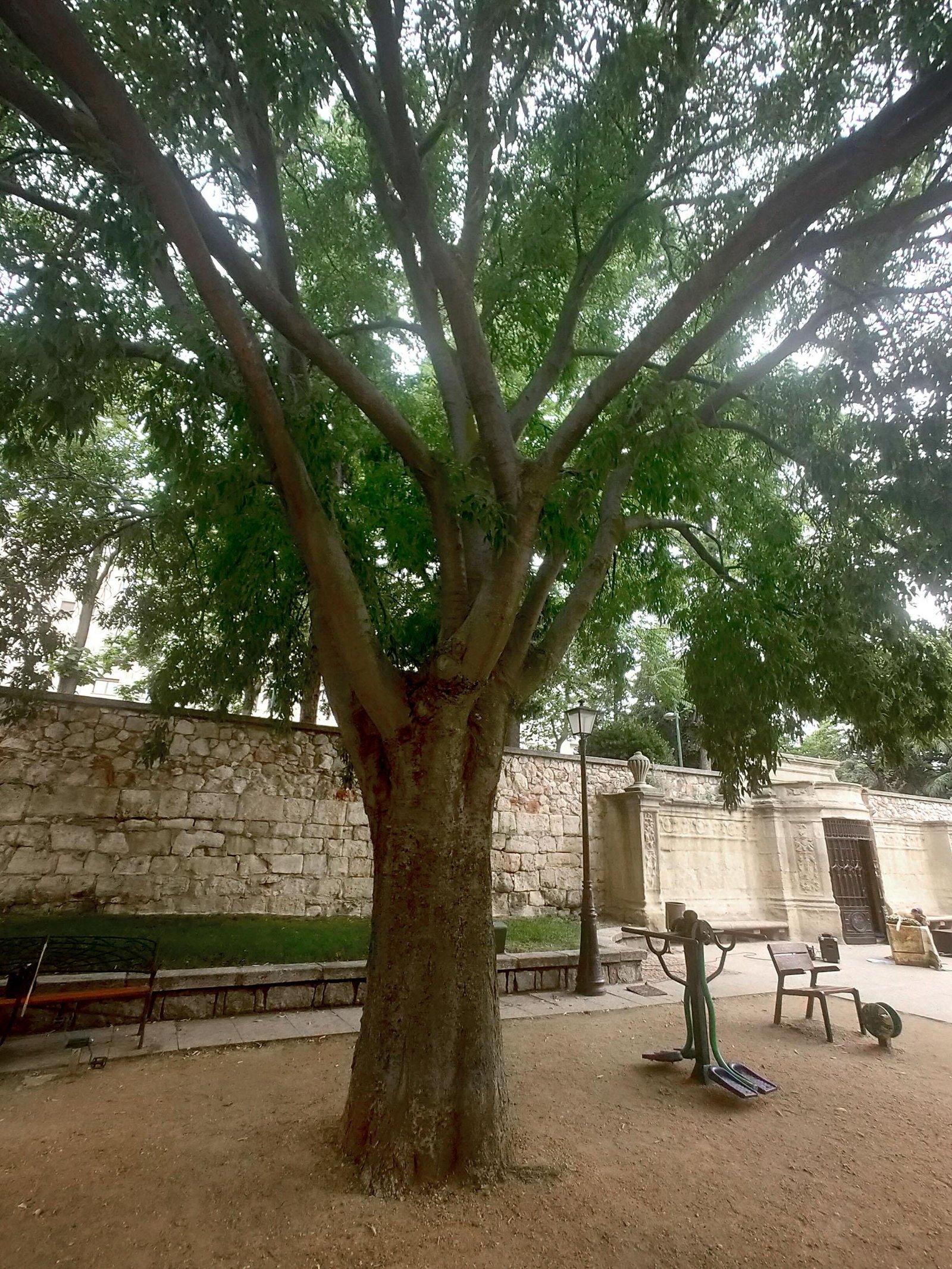
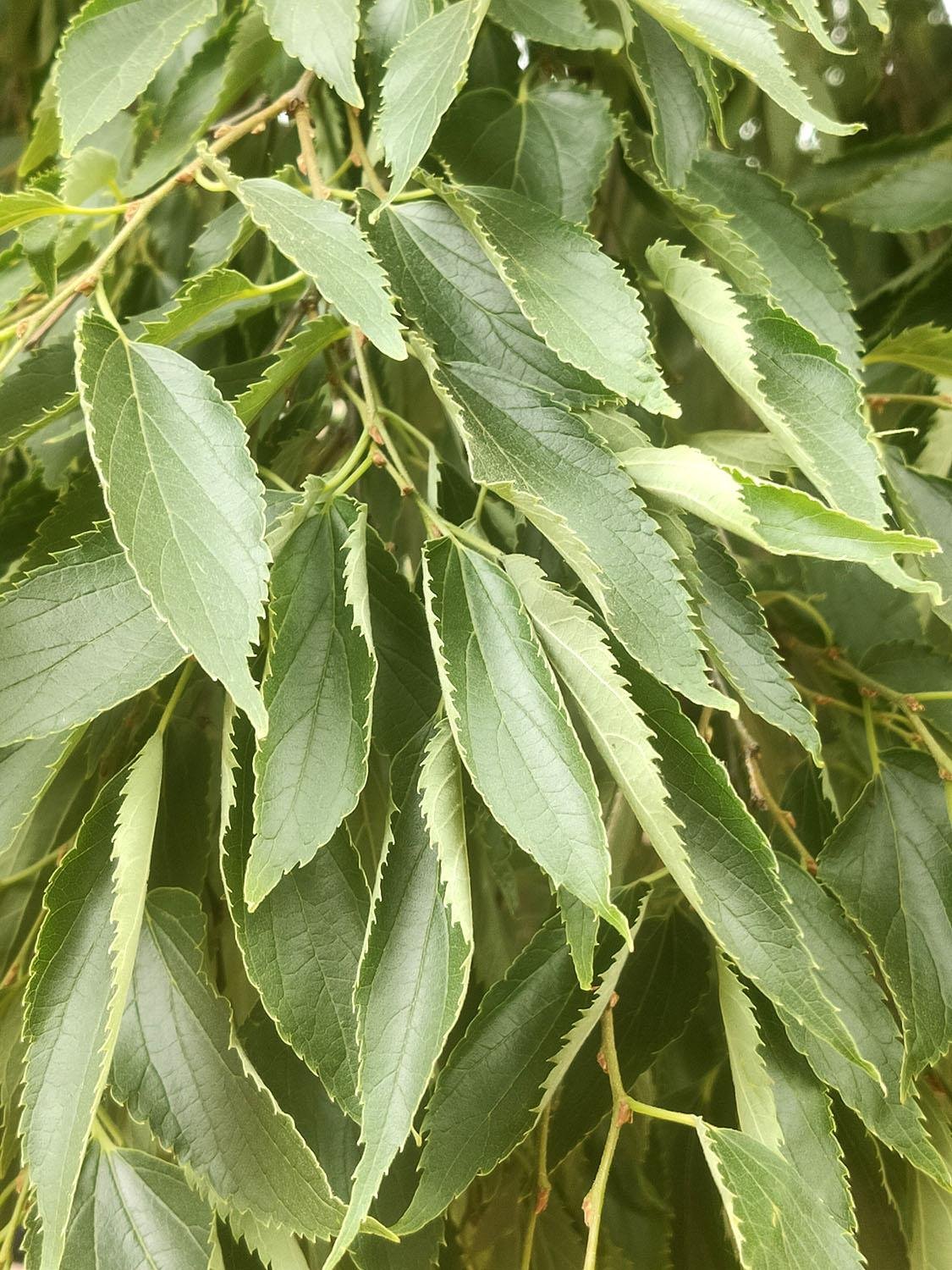
…a magnificent elm, also known as lodón. In the Arribes del Duero, it is called ojaranzo for its leaves, which resemble large eyes. It produces small, edible fruits called almecinas, though it is not advisable to eat them in the city. In Andalusia, they are still commonly sold on the streets in paper cones. In the lands of Salamanca, the tree is known for its use in making multi-pronged forks used to turn straw in the threshing floors, thanks to its highly workable wood.