Among monumental cedars and historic buildings
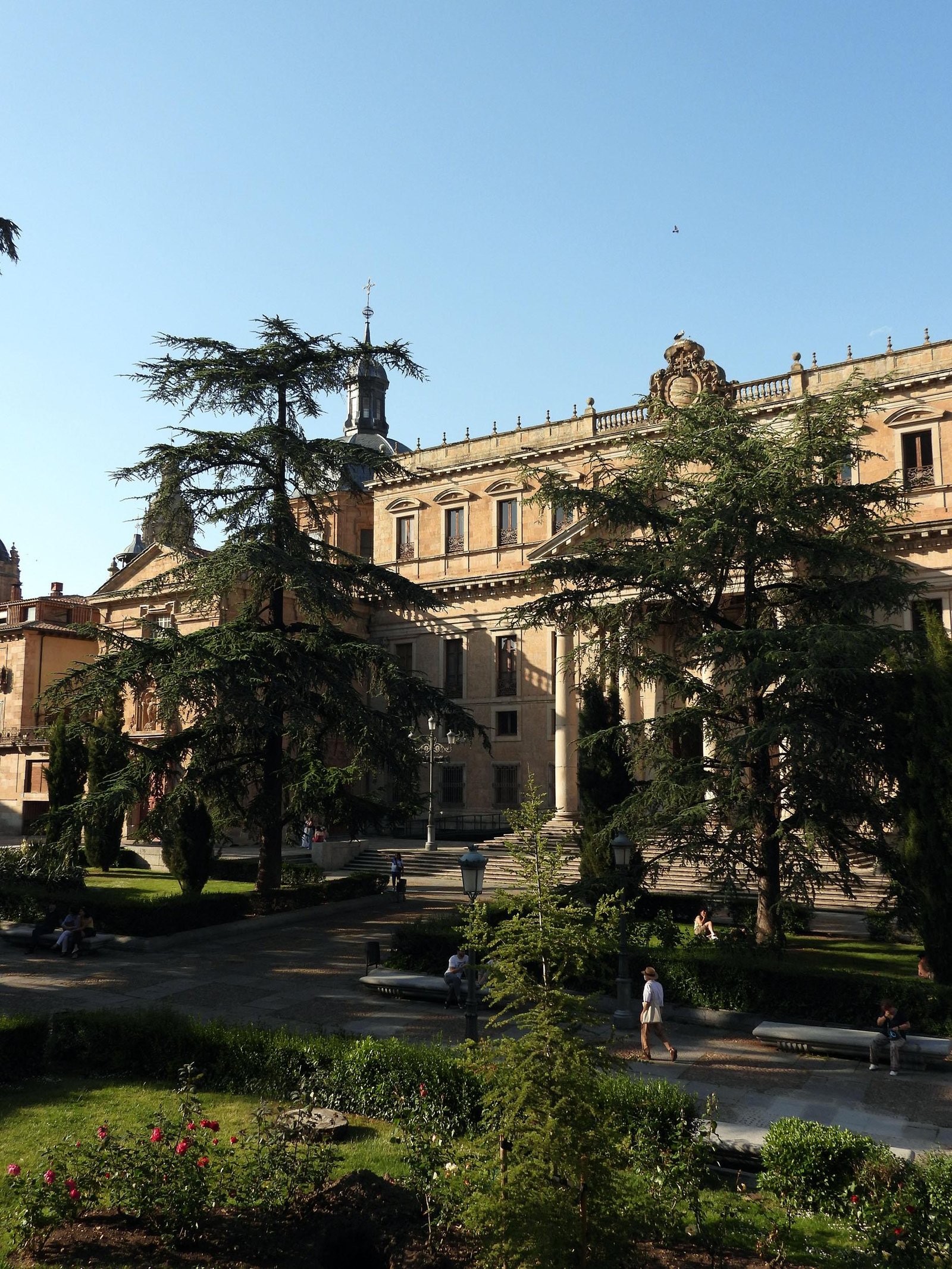
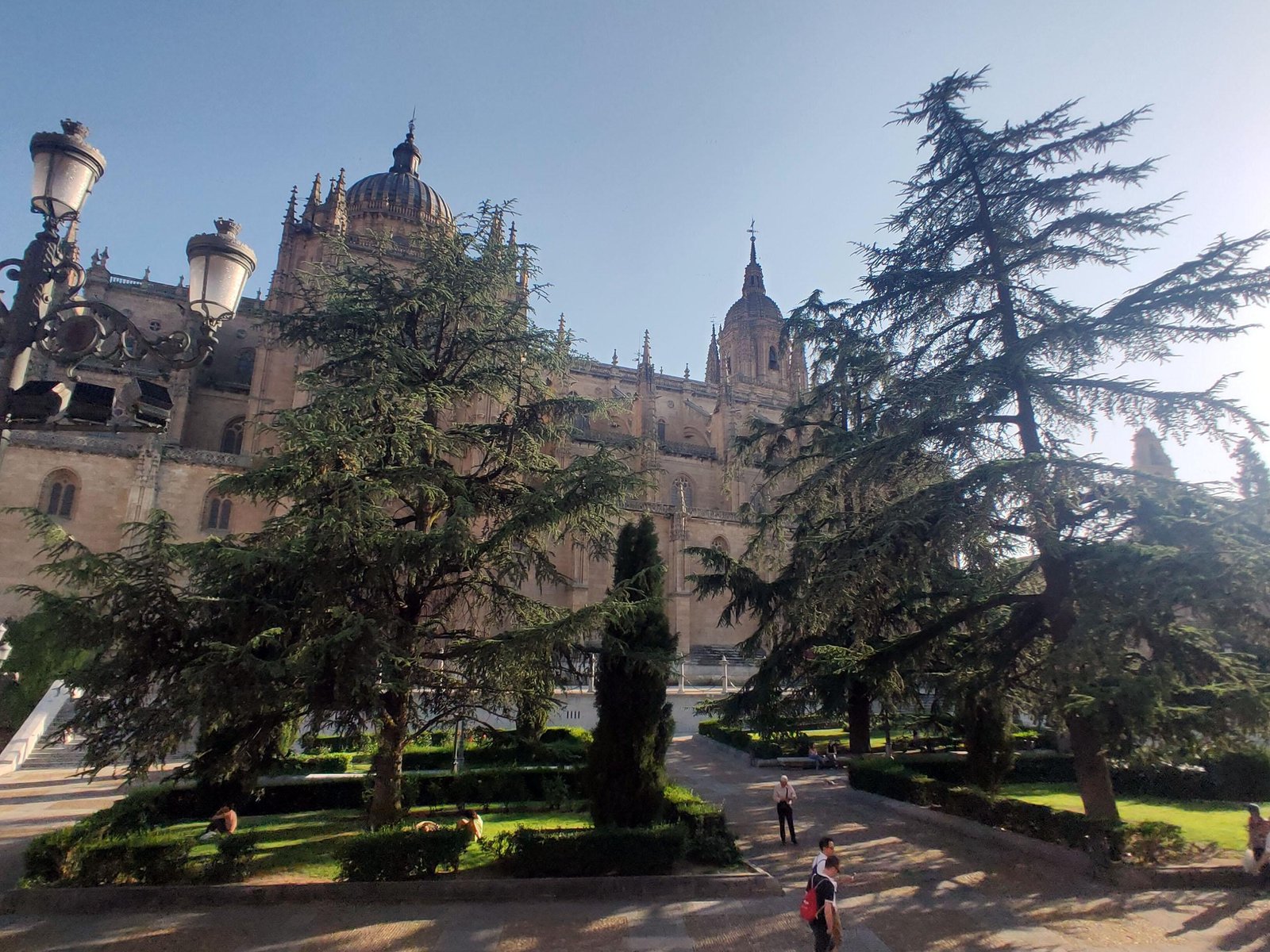
Without a doubt, Anaya Square is one of the most beautiful squares in the city. The combination of the greenery of the trees and the golden hues of the cathedrals creates a constantly changing, stunning scene.
Until 1811, the square was occupied by a small neighborhood of houses—something hard to imagine today. Around that time, the French army’s military commander, General Thiebault, ordered their demolition and even drafted an initial design for the future gardened space.
Since then, the square has gone through several phases and landscapes. It began as a simple plot of land and, over time, became a first garden with acacias. In the 1970s, it acquired its current layout, organized into square plots known as parterres.
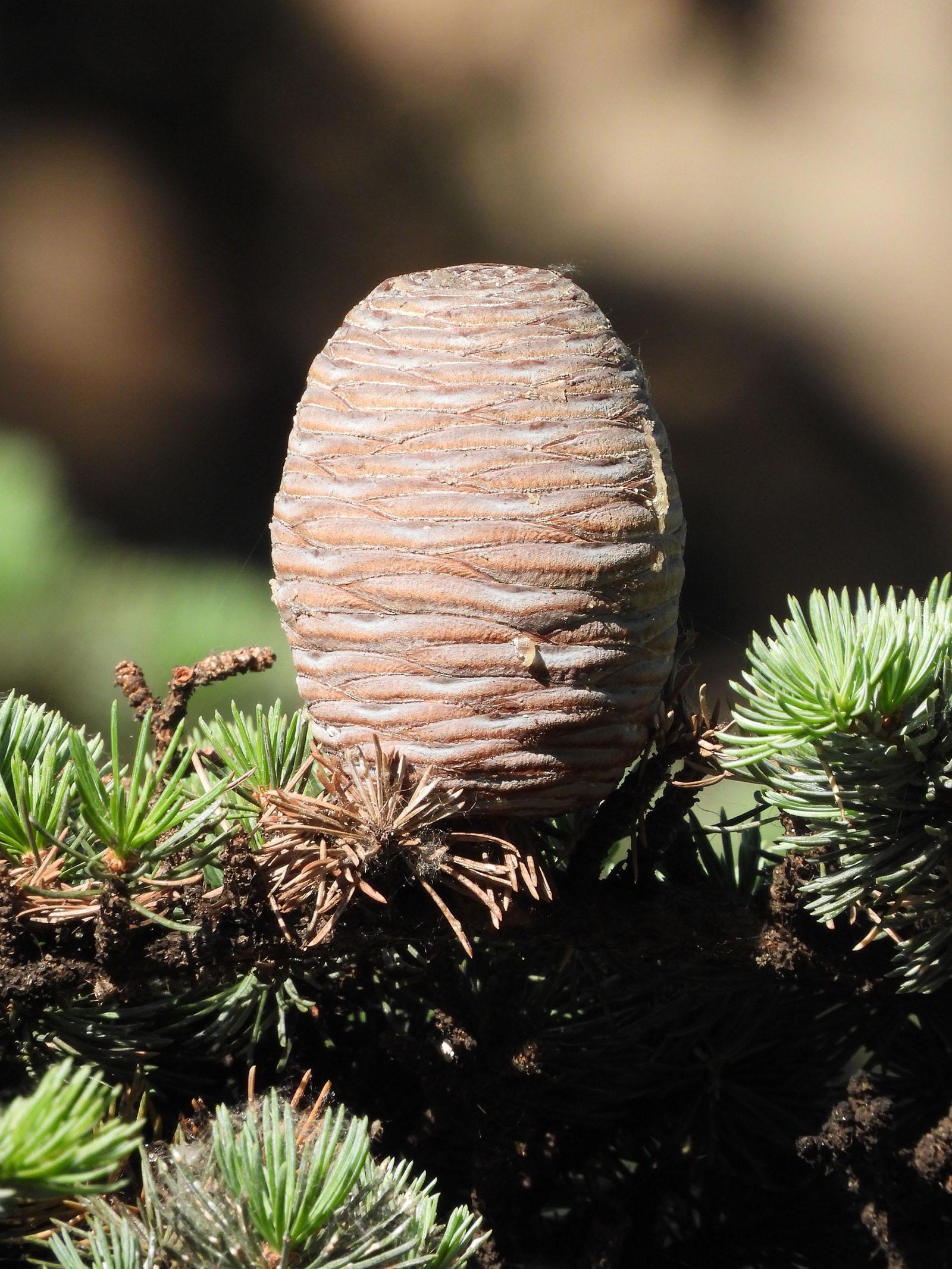
From that moment, the cedars became the defining feature of the square. Their presence blends beautifully with the tower of the New Cathedral. Specifically, these are Atlas cedars, native to the mountains of Morocco. Their forests in North Africa are home to Barbary macaques, the same species that inhabit the Rock of Gibraltar. Quite surprising, isn’t it?
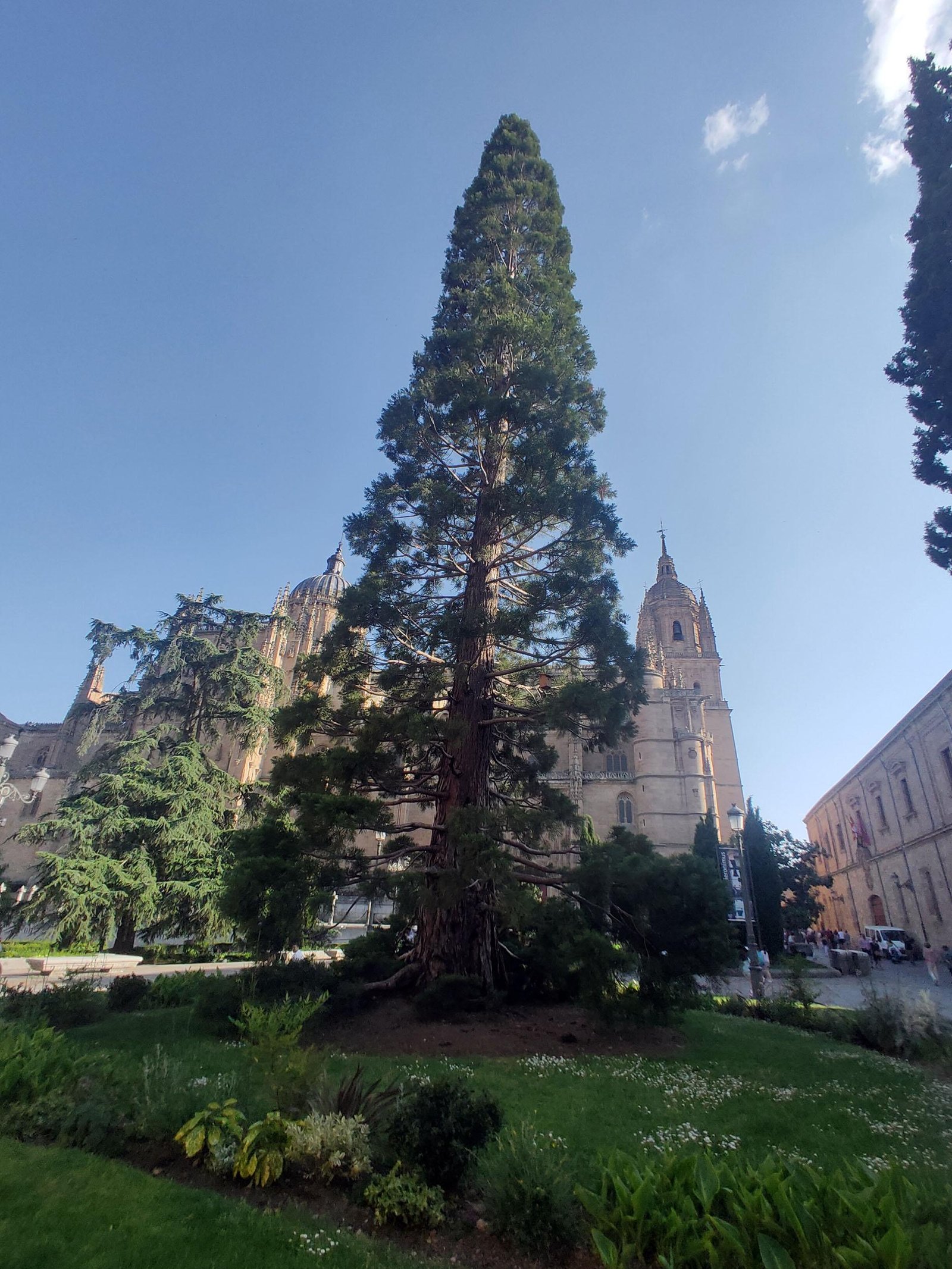
We should not forget to admire the magnificent sequoia planted in 1976 by Pablo Beltrán Heredia y Onís, then mayor of the city. In his planting speech, he expressed a special wish: “When this sequoia grows and its crown reaches the one in the University Cloister, both will symbolize the twinning of the city and the academic institution.” Today, the crowns of both trees can be seen from one another.
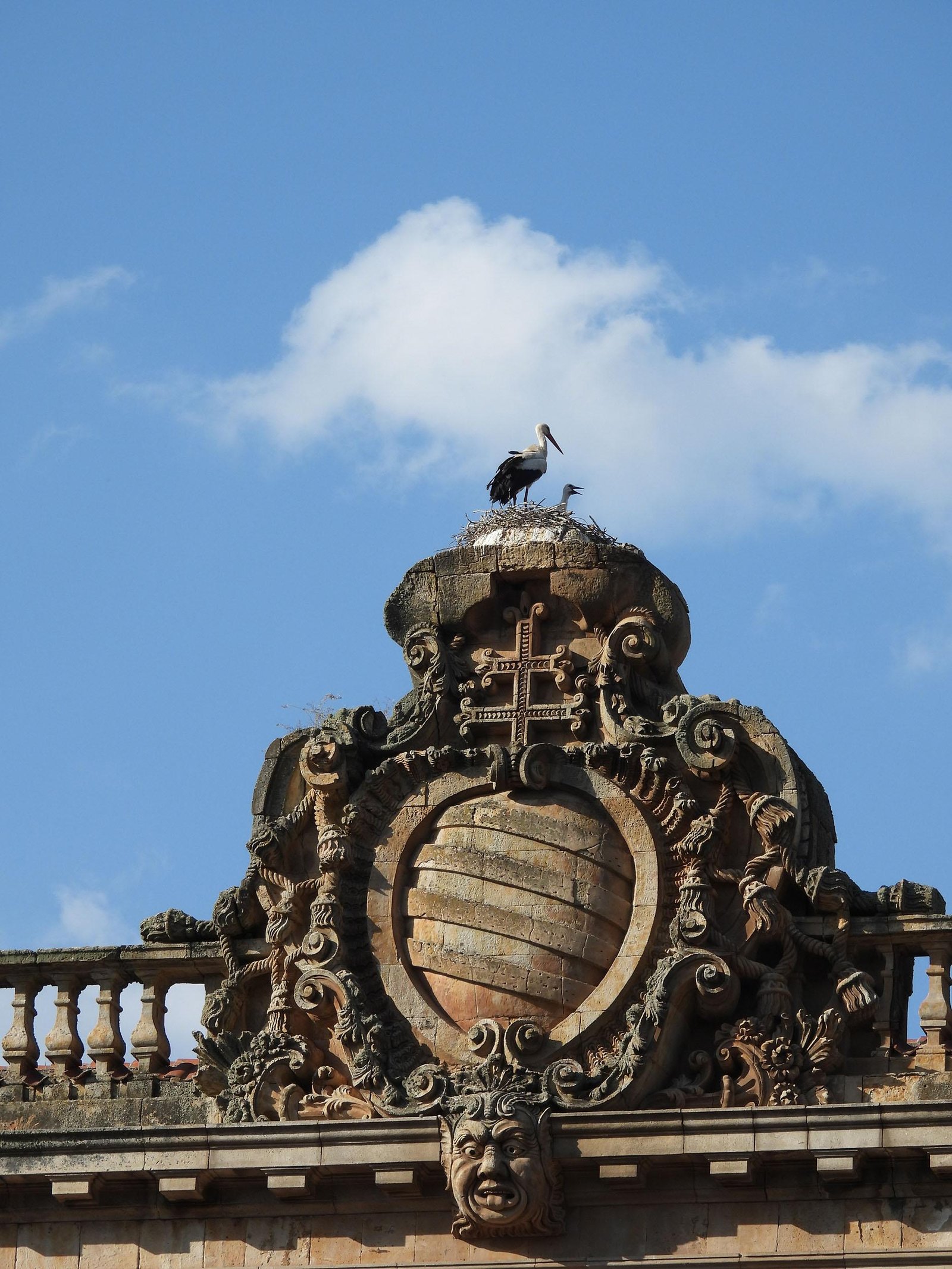
The square would not have the same soundscape without the presence of the storks. The clattering of their beaks blends with the cathedral bells, creating a unique acoustic atmosphere. Sitting on the steps of the Palacio de Anaya, it is a pleasure to watch them fly and glide toward their nests. The most prestigious nest is the one above the palace’s coat of arms. It has become part of the stonework itself, bringing vitality to the square with its presence.
If you are patient, in spring you may spot peregrine falcons in flight. A pair nests on the rooftops, keeping pigeons at bay.
At night, when the cathedral complex is illuminated, pale-feathered birds appear. These are lesser kestrels, who hunt moths attracted to the lights. Their flight is a true choreography of rises and dips, twists, and turns.
Try to find...
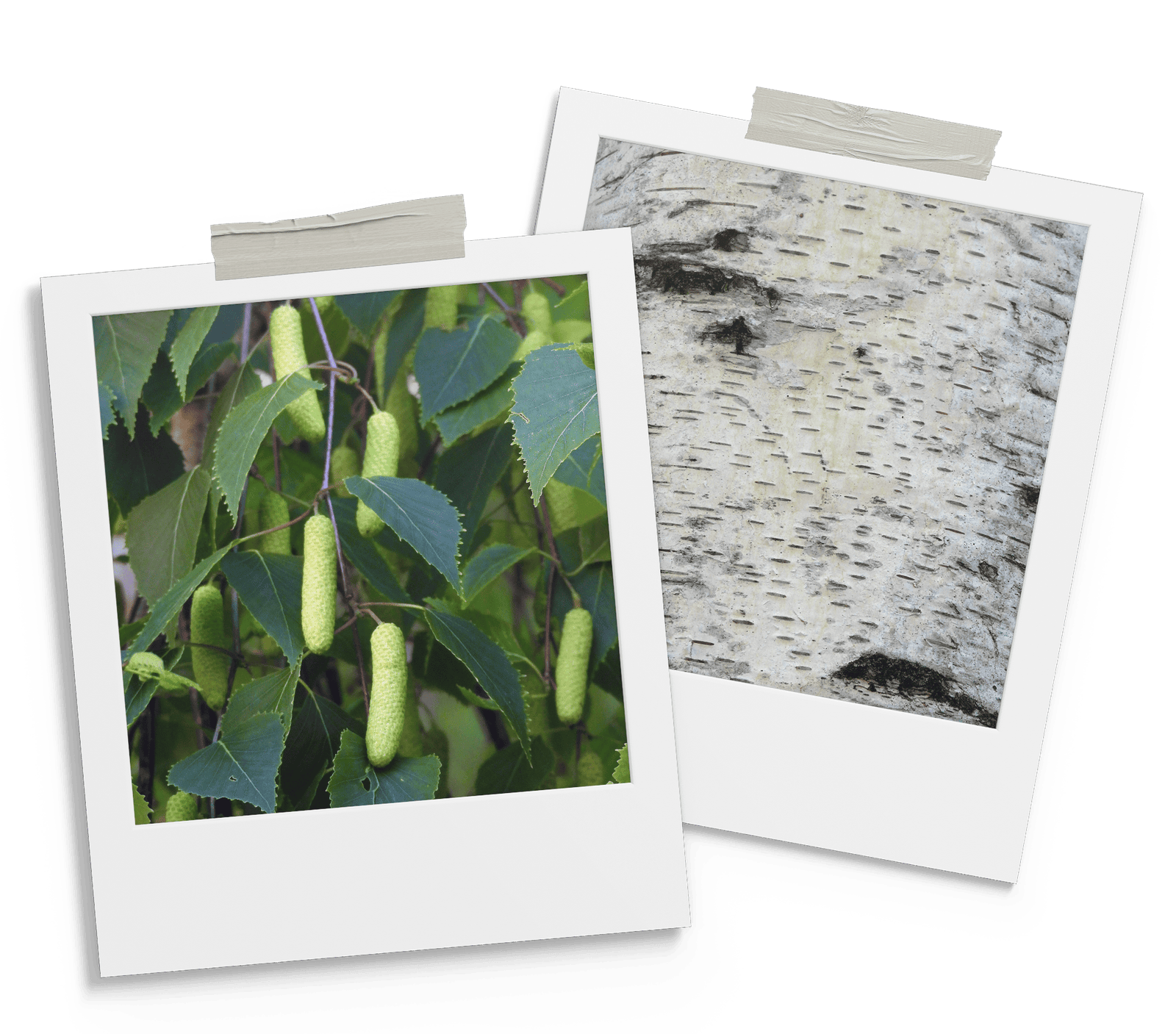
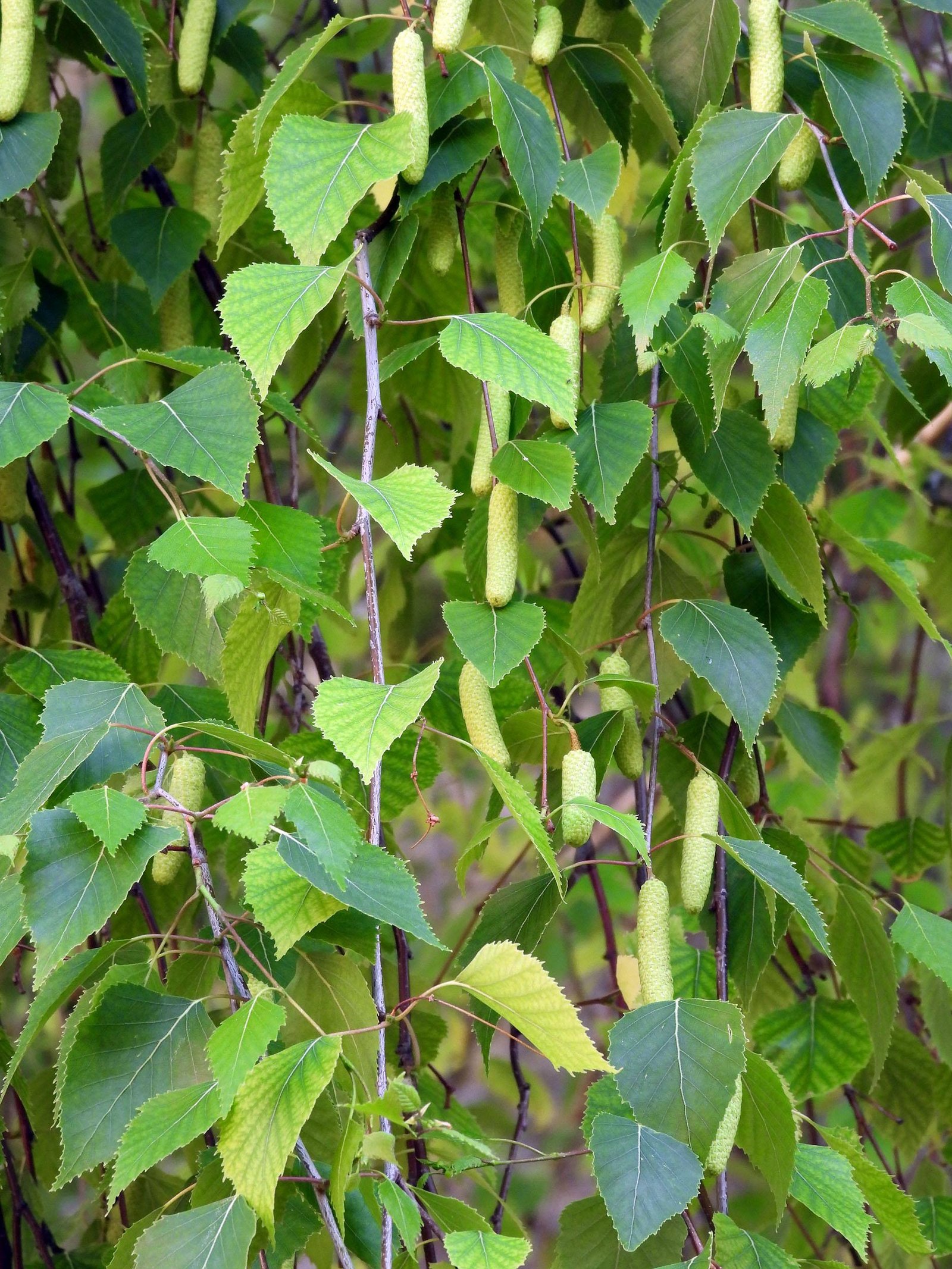
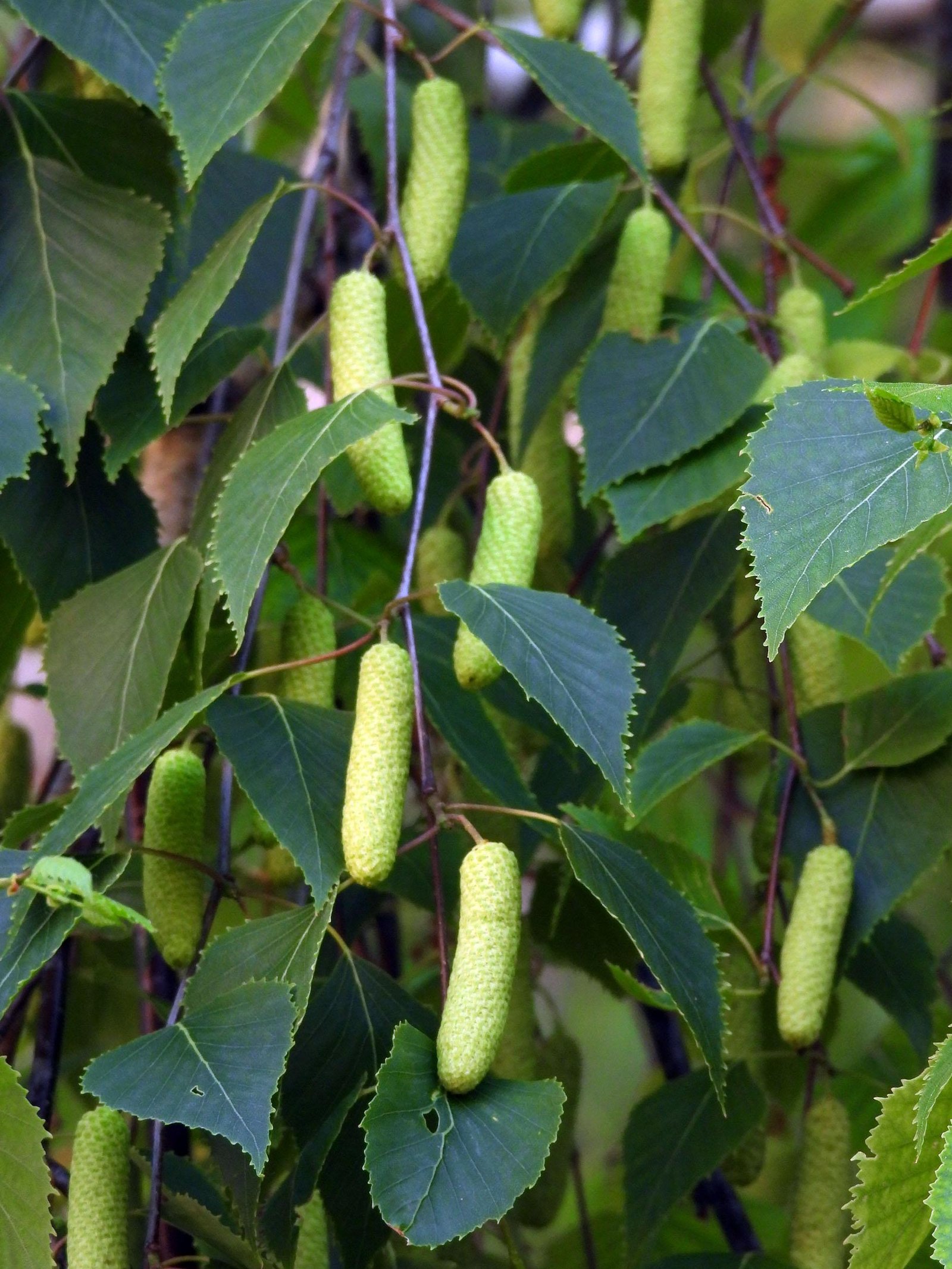
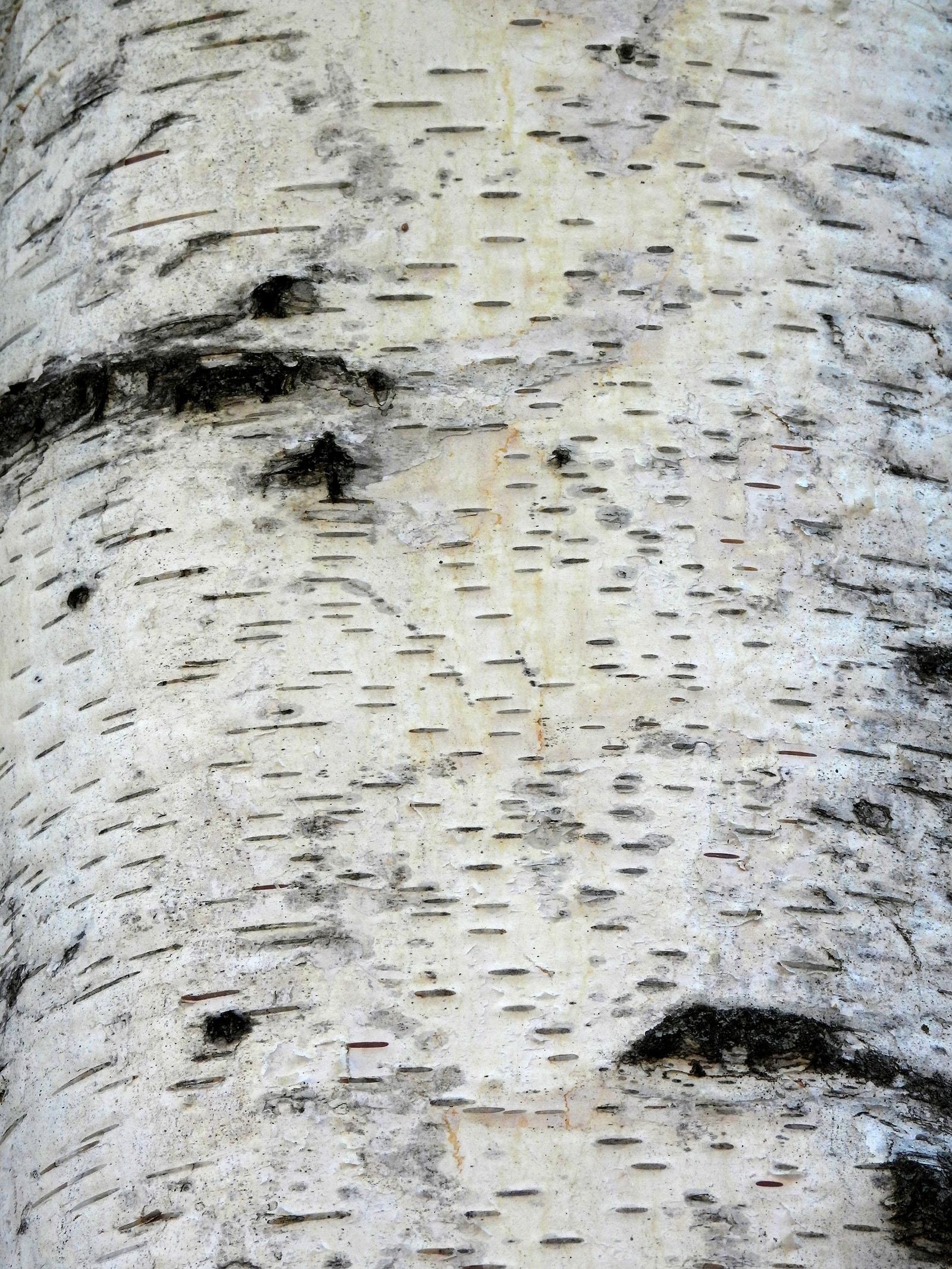
…the birch hidden in a corner next to the Cathedral walls. An elegant specimen, with strikingly white bark and diamond-shaped leaves. In its quiet anonymity, it has spent years watching university students from the Juan del Encina Building and visitors pass by, as they circle the cathedral on their way to the Huerto de Calixto y Melibea. This could be your next stop, if you haven’t visited it yet.