Nature, history, and the soul of Salamanca
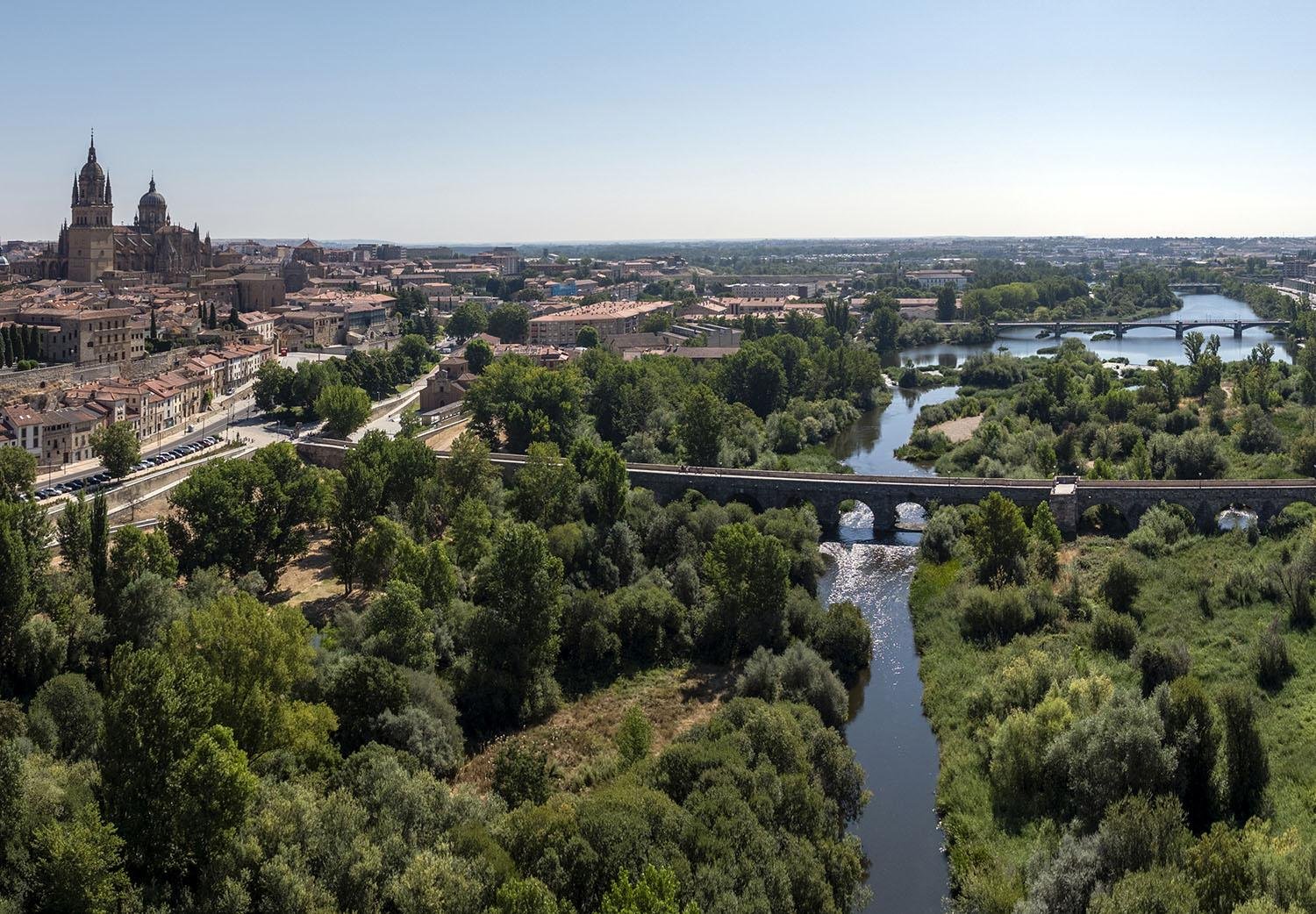
At the foot of Salamanca’s monumental old town, the river Tormes winds gently, reflecting centuries of history on its calm surface. Along its banks stretches an extensive riverside walkway that invites visitors to experience the city from a different perspective—one that is quieter, closer to nature, and deeply connected to the landscape. Between the bridges of Príncipe de Asturias, Enrique Estevan, the Roman Bridge, and the University Bridge, walkers find a green corridor where the murmur of the water mingles with birdsong and the distant echo of cathedral bells.
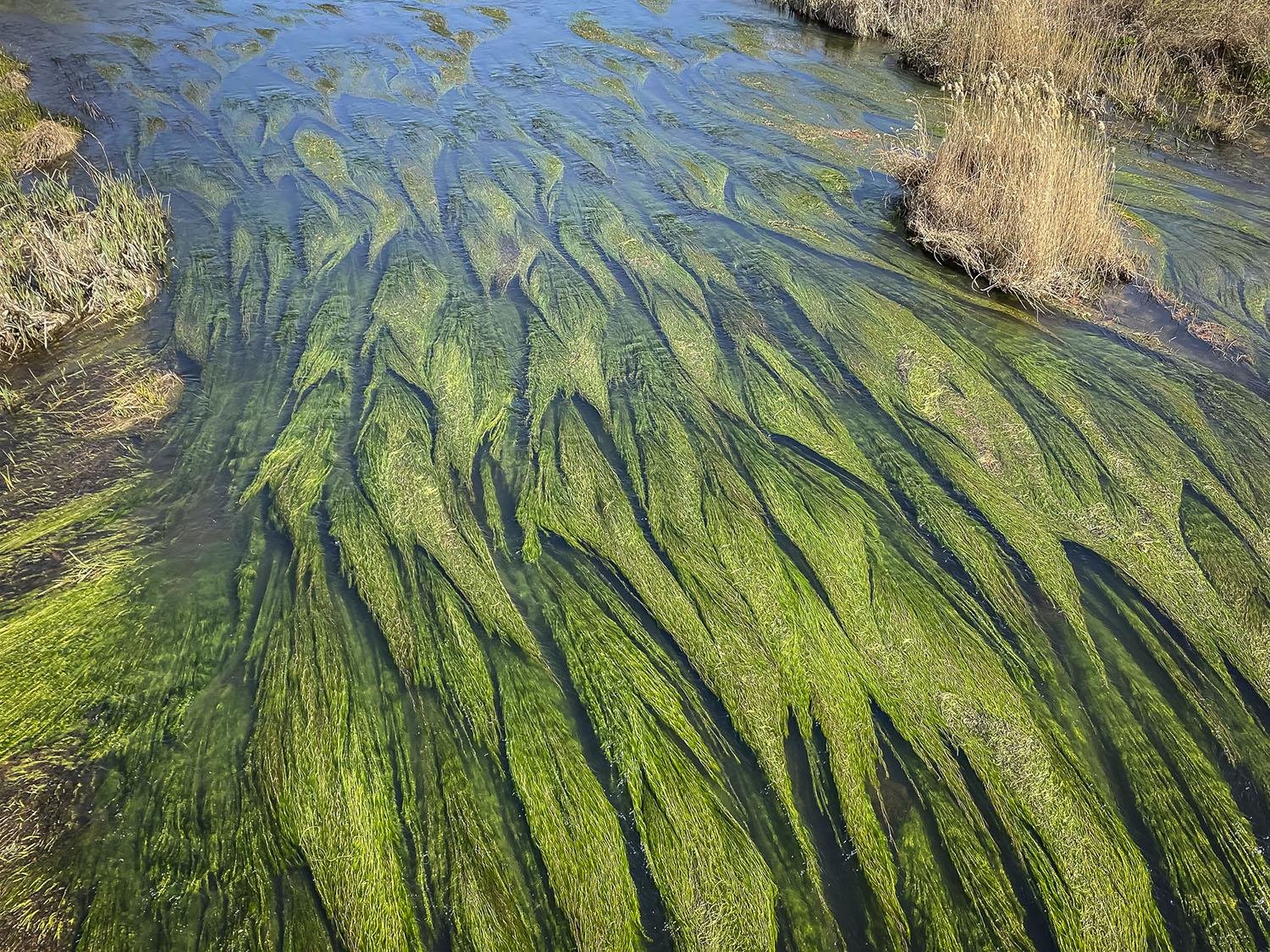
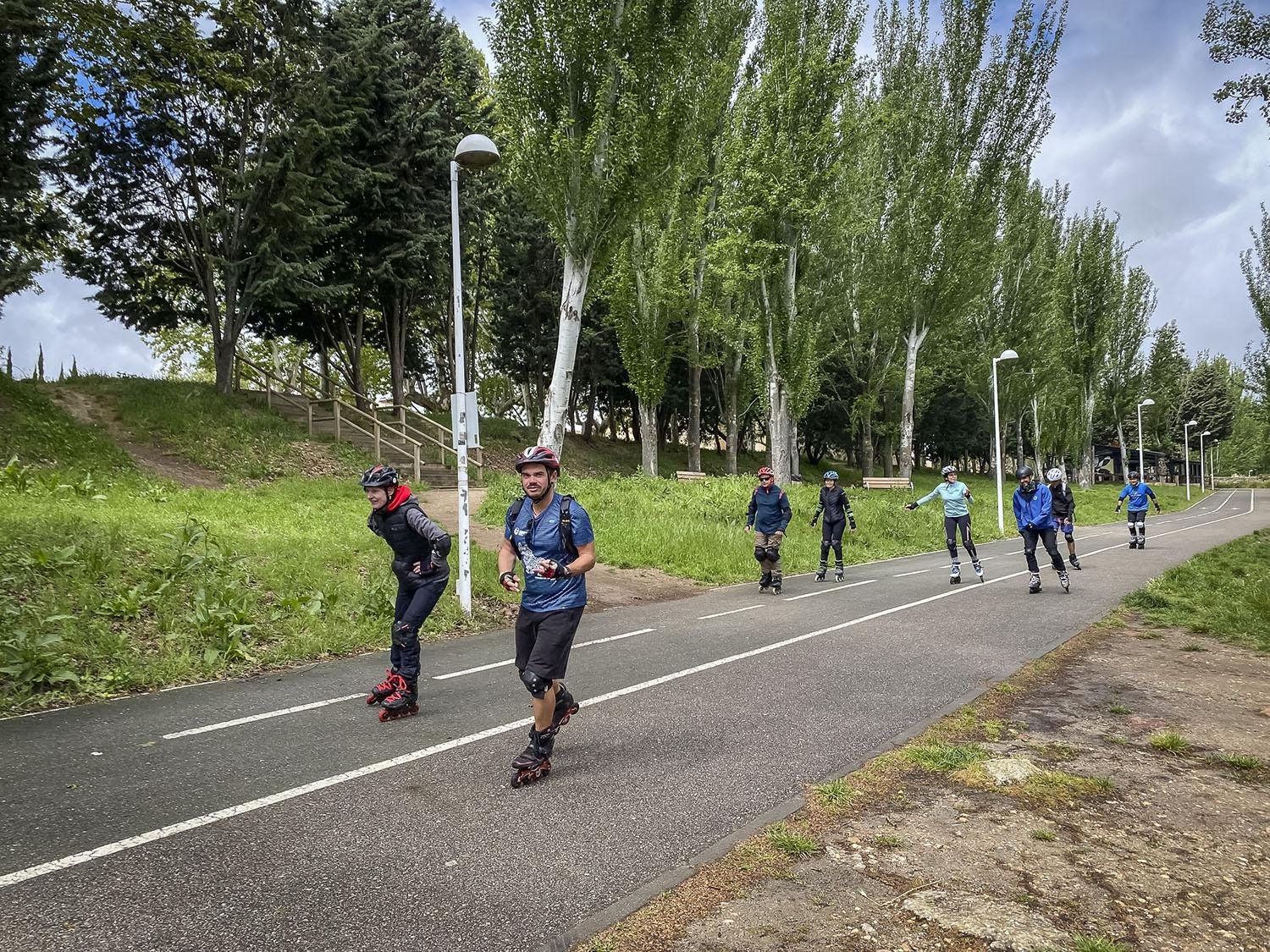
The riverside path unfolds as a succession of landscapes that blend history, nature, and everyday life. Poplars, willows, and alders grow along the margins, shading the paths frequented by strollers, cyclists, and anglers. In the air, herons, ducks, and swallows swoop and glide, accompanying the steady flow of the Tormes.
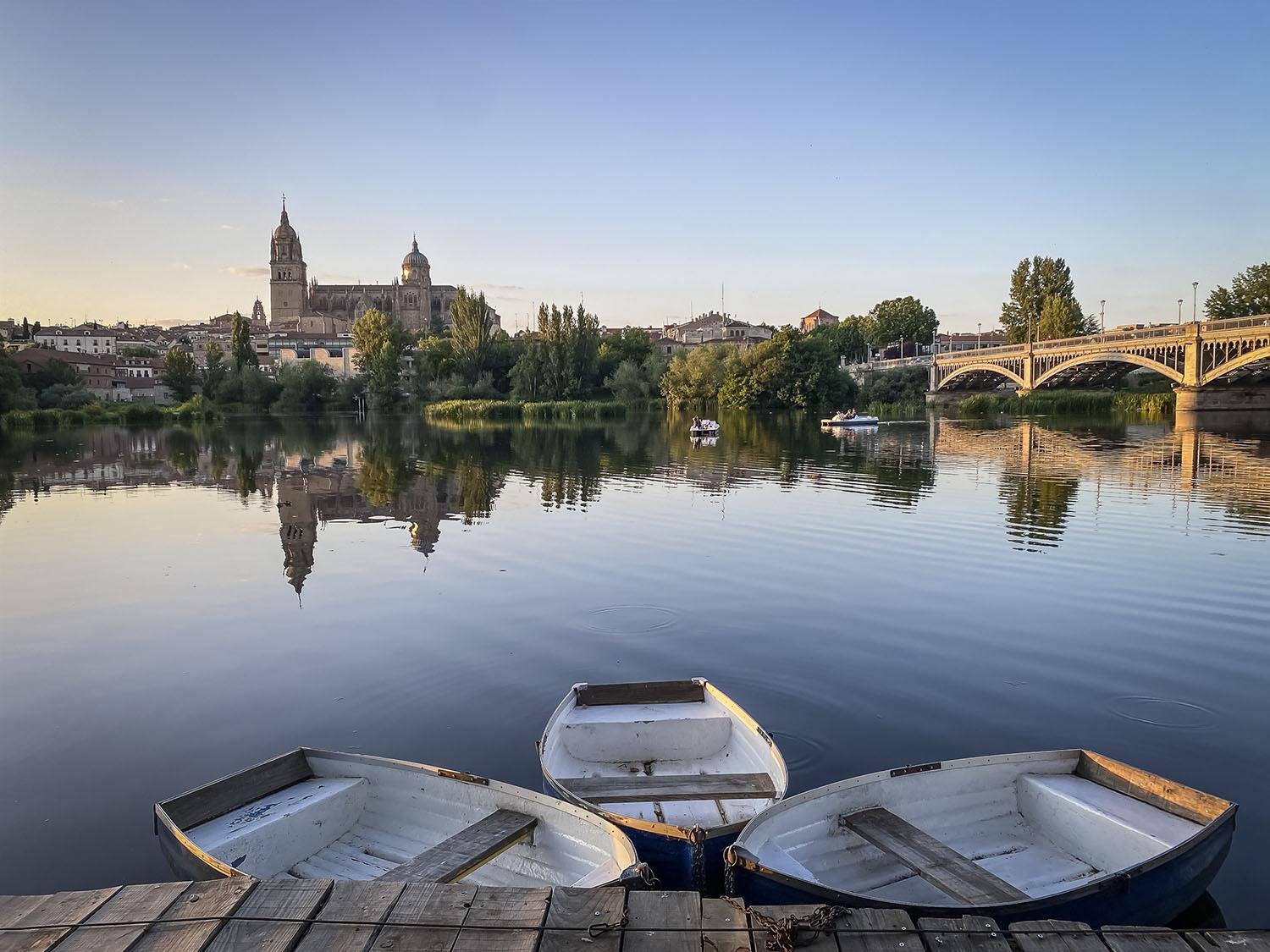
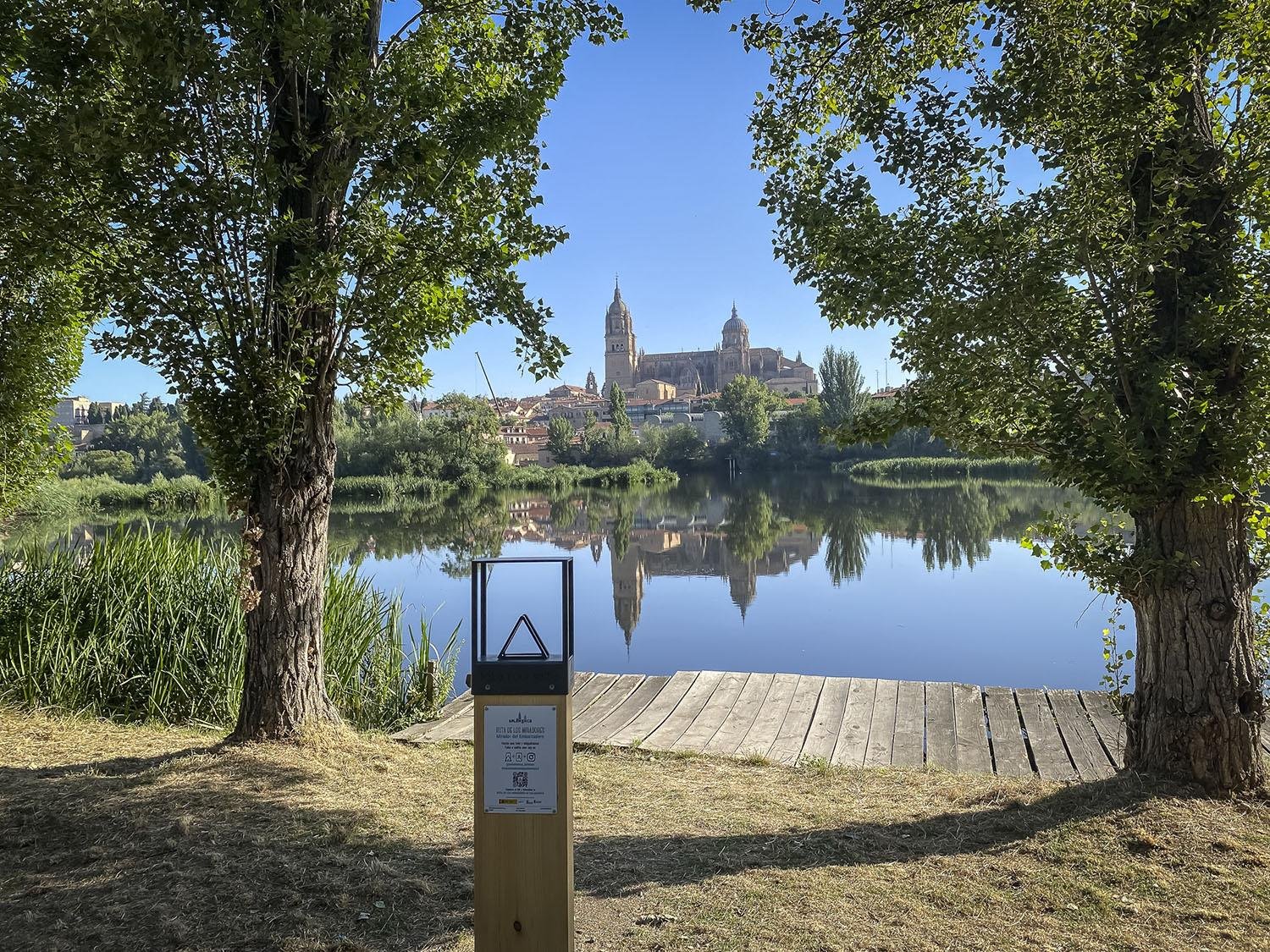
One of the most evocative places is the Tormes boat dock, where, during the warmer months, visitors can rent small rowboats. Here, couples, families, and groups of friends enjoy the gentle sway of the river as the sun sets over Salamanca’s golden stone. Sailing along the Tormes offers a different way to contemplate the city: from the water, the Cathedral towers and the profile of the old town seem to float in the air, multiplied by the reflections in the river.
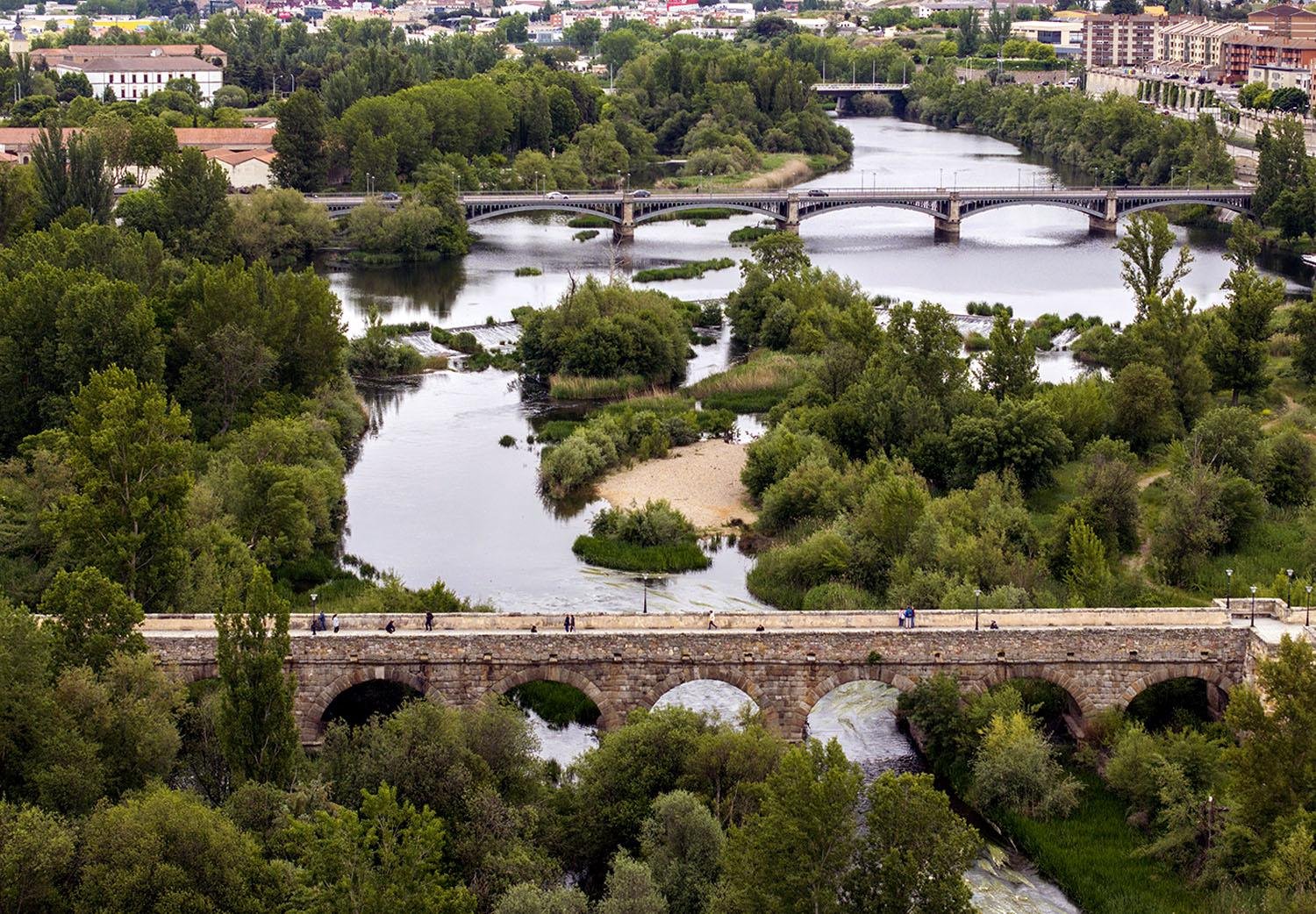
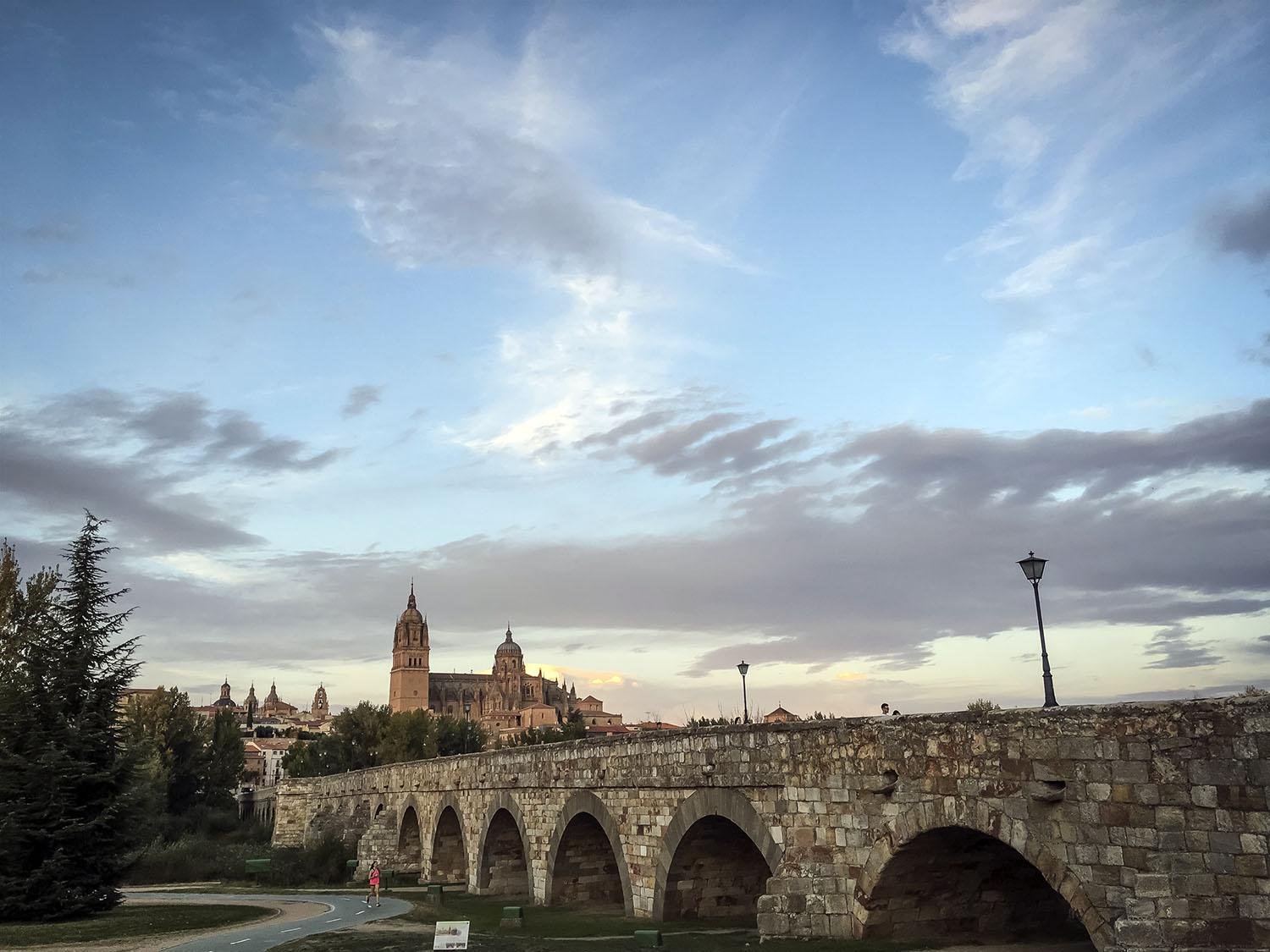
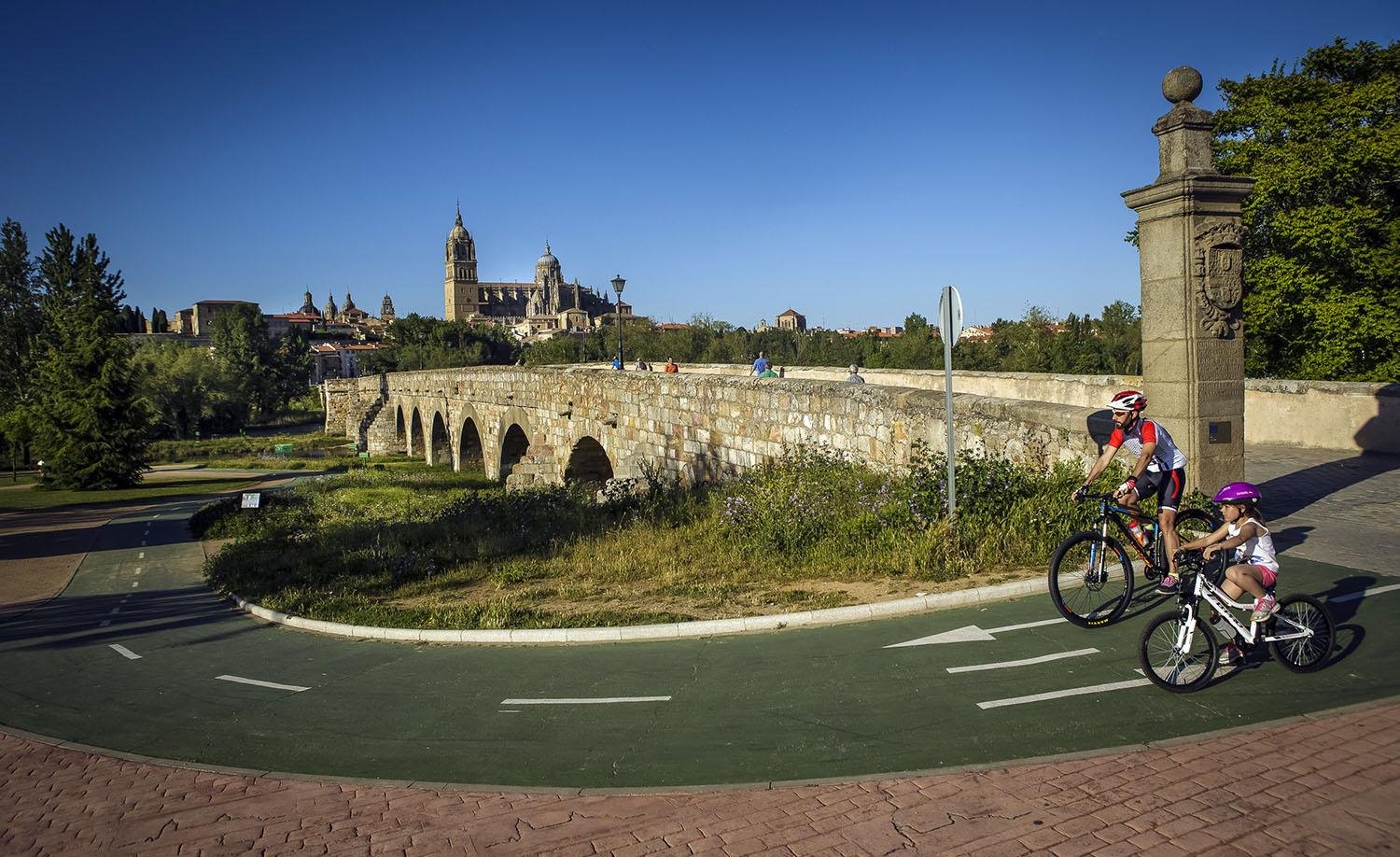
The walk reaches its most iconic point at the Roman Bridge, a millennia-old treasure with nearly two thousand years of history. Built during the reign of Emperor Trajan, it formed part of the ancient Vía de la Plata and was for centuries the main southern entrance to the city. Today, fifteen of its original twenty-six arches survive, Roman in origin and silent witnesses to a past in which the Tormes was both frontier and roadway. From its deck, one can still imagine the caravans of merchants and travelers who journeyed northward through Hispania from distant Lusitania.
Further along, the Enrique Estevan Bridge—with its elegant early-20th-century iron structure—and the modern University Bridge complete the dialogue between past and present that defines Salamanca’s riverscape. Each bridge reflects a particular era and a different way of understanding the city’s relationship with its river.
But if there is one day when the banks of the Tormes take on special significance, it is Lunes de Aguas. On the afternoon of this Monday, one week after Easter Sunday, Salamanca revives one of its most beloved traditions. Families, groups of friends, and students cross the bridges and spread out along the riverbanks or into the countryside to enjoy an open-air picnic. The culinary star of the day is hornazo, a Salmantine meat pie filled with chorizo, ham, pork loin, and hard-boiled egg—a delicacy marking the end of Lent’s weeks of abstinence. The celebration dates back to the 16th century, when, after the Lenten confinement, the people of Salamanca awaited the return of the women who had been sent out of the city under the supervision of the legendary Padre Putas. Today, the tradition remains festive and lighthearted, and the Tormes becomes a scene of community, music, and joy.
As the day fades, the riverside walk reaches its greatest beauty. At sunset, the golden stones of the old city glow, and the river becomes a liquid mirror reflecting its bridges and towers. It is then that Salamanca reveals its most intimate and luminous face: that of a city shaped by its river and one that, on each bank, preserves a piece of its history.
Prueba a encontrar...
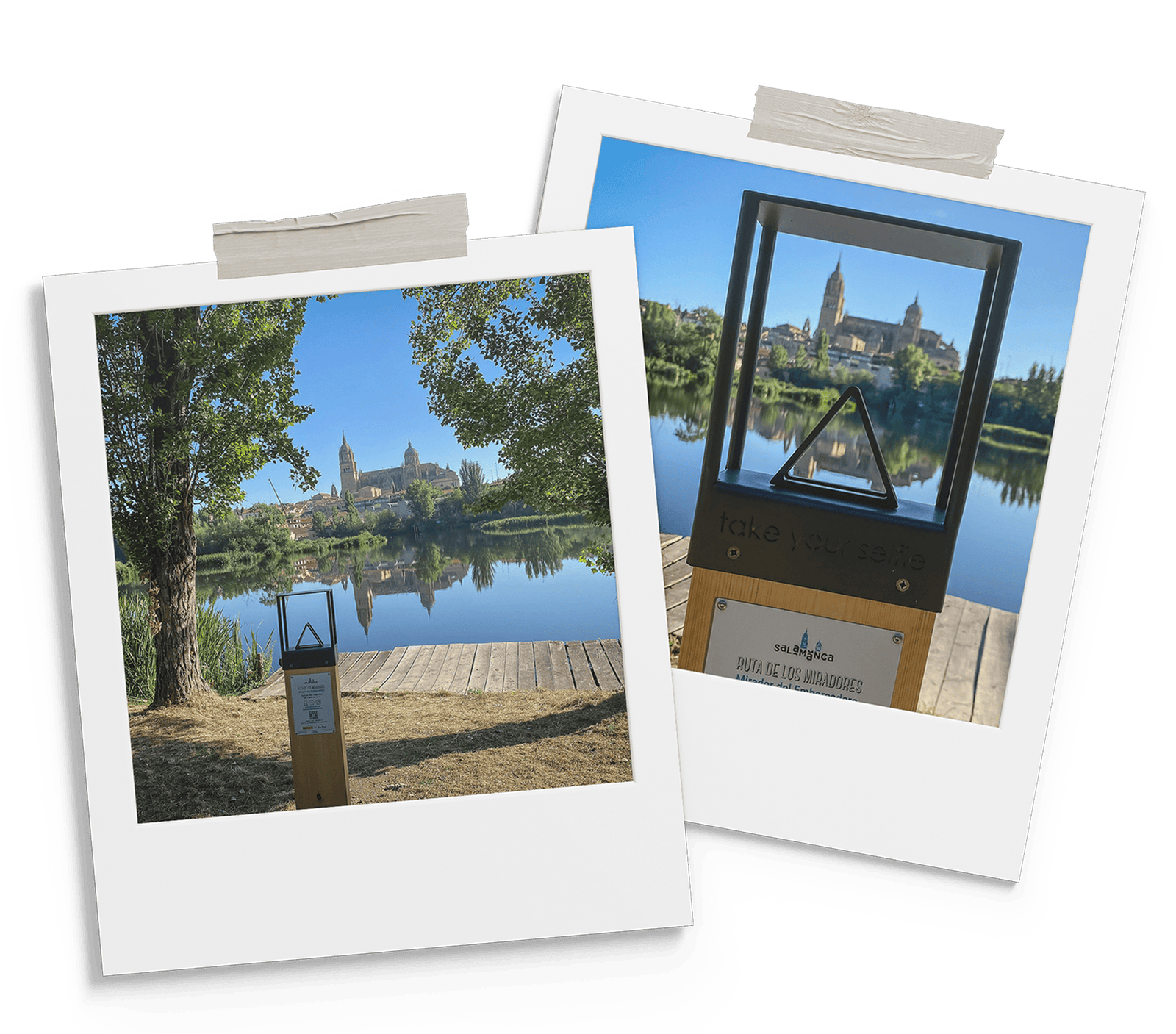
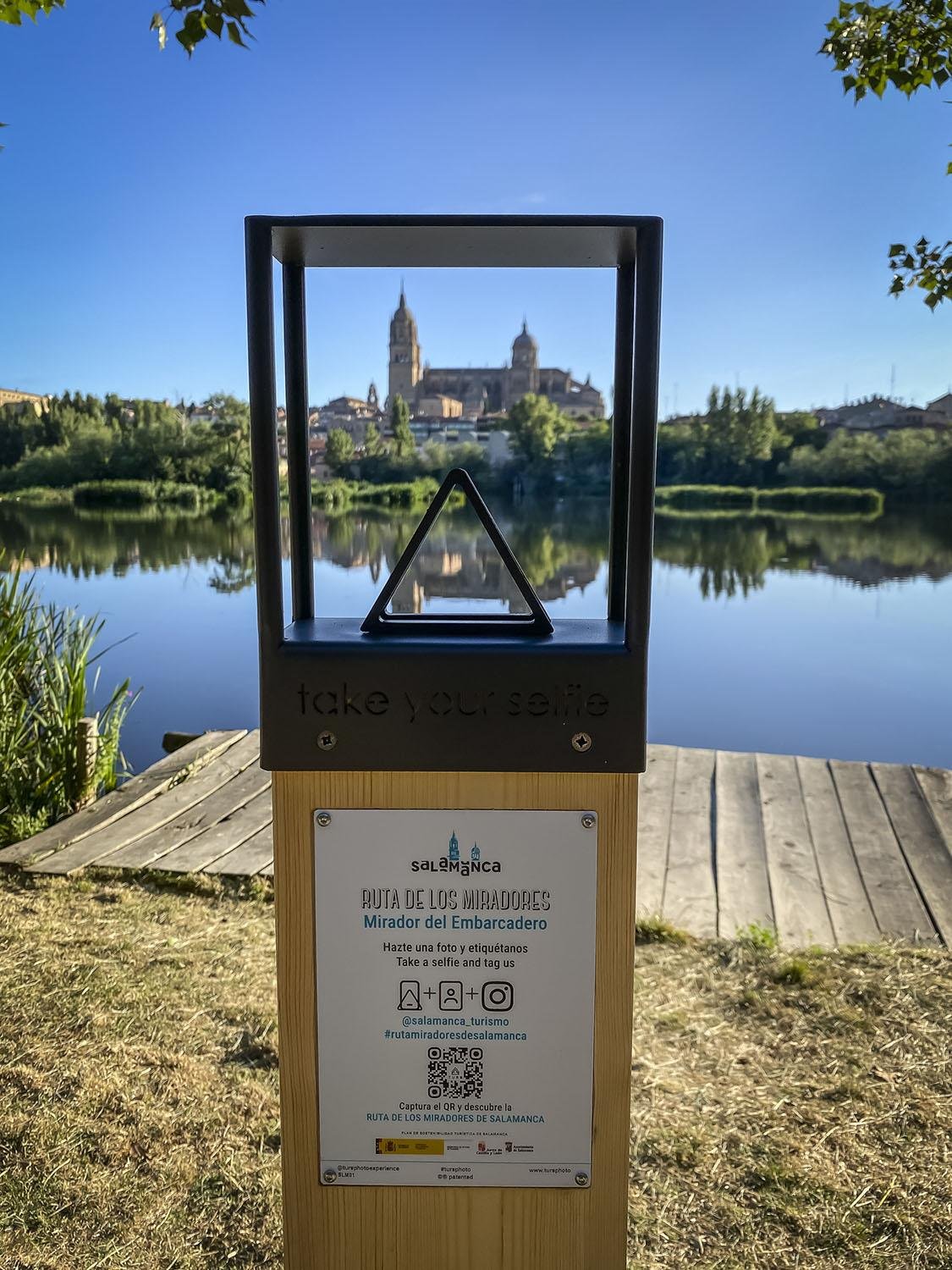
…the quiet corners that invite you to rest, the natural viewpoints from which to contemplate the city, and the benches where you can simply stop and listen to the flowing water. And don’t miss the viewpoint at the boat dock, one of the most special places along the walk: there you’ll find the perfect selfie spot to capture Salamanca reflected in the waters of the Tormes.